











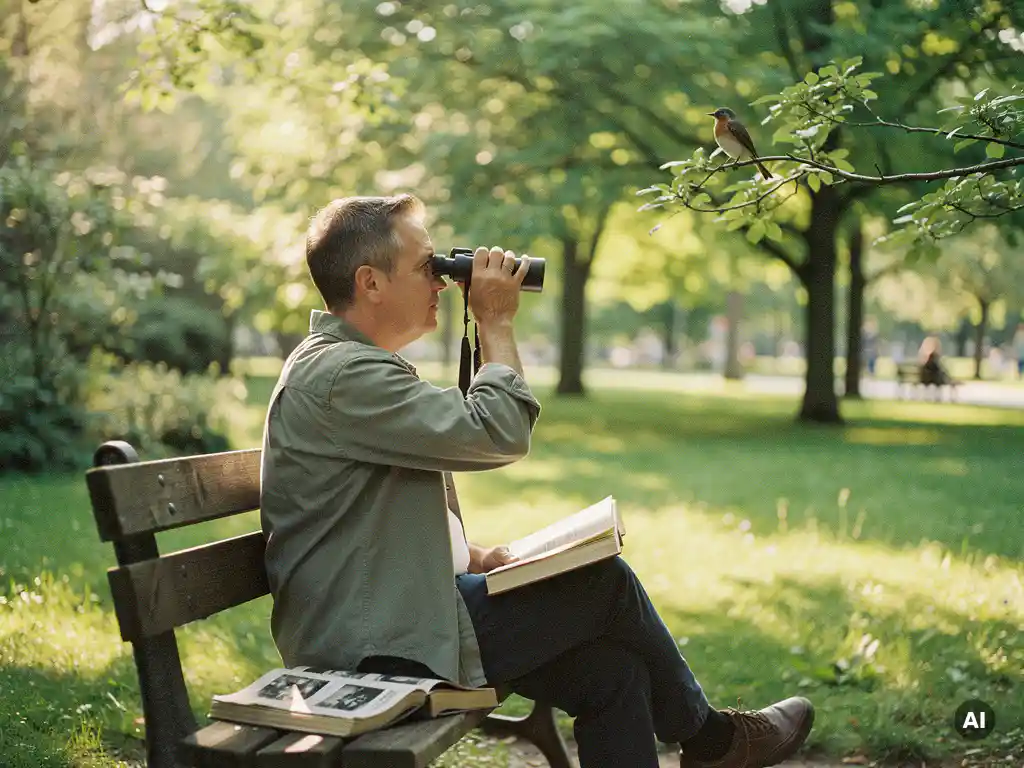
Yes, birdwatching can genuinely help reduce stress and anxiety. Research into nature-based wellbeing consistently shows that spending time observing birds lowers cortisol levels, slows the heart rate, and shifts the mind away from ruminative thought patterns. The combination of gentle focus, natural sounds, and outdoor exposure makes it one of the more accessible and effective tools for everyday mental health. Below, we unpack the science, the mechanics, and the practical steps to get started.
What does science say about birdwatching and mental health?
Science is increasingly supportive of birdwatching as a genuine mental health tool. Studies in environmental psychology show that exposure to birdsong and natural environments measurably reduces psychological stress markers. Research published by King’s College London found that seeing or hearing birds was associated with improved wellbeing that lasted several hours, even in urban settings. The birdwatching mental health connection is not just anecdotal.
The field of ecotherapy, which explores how contact with nature supports psychological health, repeatedly points to bird activity as a particularly effective stimulus. Unlike passive nature exposure, birdwatching encourages soft fascination, a state where attention is gently held without effort or strain. This is the opposite of the directed, high-effort concentration that causes mental fatigue at work or during stressful life periods.
Birdsong specifically has been shown to reduce activity in the amygdala, the brain’s threat-detection centre. When the brain registers bird sounds, it interprets the environment as safe, which directly counters the physiological stress response. This is one of the reasons birdwatching benefits extend beyond simply being outdoors.
How does birdwatching actually reduce stress?
Birdwatching reduces stress through three overlapping mechanisms: sensory engagement, attentional restoration, and physical stillness. When you focus on spotting and identifying a bird, your mind naturally lets go of the anxious, looping thoughts that drive stress. The activity demands just enough attention to quiet mental noise without triggering the kind of effort that adds to it.
Attentional Restoration Theory, developed by environmental psychologists Rachel and Stephen Kaplan, explains why this works. Natural environments, and particularly wildlife observation, restore the brain’s capacity for directed attention by giving it a genuine break. Birdwatching is one of the clearest practical applications of this theory because it combines novelty, movement, and unpredictability in a low-pressure context.
There is also a mindfulness dimension. Effective birdwatching requires you to be fully present: listening carefully, scanning slowly, staying still. This is, in effect, a form of informal mindfulness practice, and it delivers many of the same stress-reduction outcomes without any of the formality or instruction that some people find off-putting about traditional meditation.
Finally, birdwatching almost always involves being outdoors, which means exposure to natural light, fresh air, and gentle physical movement. Each of these independently supports lower cortisol levels and a calmer nervous system.
Is birdwatching better for anxiety than other outdoor activities?
Birdwatching is not universally better than all outdoor activities, but it has specific advantages for anxiety that many other pursuits lack. Its defining strength is that it is inherently slow and observational, which makes it well suited to people whose anxiety is worsened by performance pressure, competition, or physical exertion. You cannot fail at birdwatching in any meaningful way.
Activities like running or cycling are excellent for stress but require physical effort and can feel like another item on a to-do list. Birdwatching, by contrast, rewards patience and presence rather than output. For people with anxiety, that distinction matters. There is no target to hit, no pace to maintain, and no benchmark against which to measure yourself.
Compared to simply walking in nature, birdwatching adds a layer of purposeful engagement that deepens the restorative effect. A walk can still leave the mind wandering back to anxious thoughts. Birdwatching gives the mind a gentle anchor, something on which to focus, without demanding the kind of concentration that causes fatigue.
For social anxiety specifically, birdwatching also offers a comfortable social structure. Birdwatching groups are typically quiet, focused, and welcoming to newcomers, which makes them less socially demanding than many other hobby communities.
How long do you need to birdwatch to feel less stressed?
Even short birdwatching sessions of 10 to 20 minutes can produce a noticeable reduction in stress. Research into nature exposure more broadly suggests that benefits begin within the first few minutes of calm engagement with a natural environment, and birdwatching accelerates this because it actively directs attention away from stressors.
That said, longer sessions tend to produce deeper and more lasting effects. An hour of birdwatching in a genuinely natural setting, such as a woodland, wetland, or coastal area, gives the nervous system enough time to fully downregulate. The first few minutes are often spent transitioning out of a stressed state, and the real restoration tends to happen once that initial shift is complete.
Regularity matters more than session length. Birdwatching anxiety benefits accumulate over time, and people who make it a consistent weekly habit report more stable improvements in mood and stress resilience than those who do it occasionally. Even watching birds from a window or garden for a few minutes each morning can build a meaningful cumulative effect.
Where is the best place to go birdwatching for stress relief?
The best places for birdwatching stress relief are environments with high bird diversity, natural soundscapes, and minimal urban noise. Woodlands, wetlands, nature reserves, coastal estuaries, and parks with mature trees all offer the right conditions. The further you are from traffic noise and artificial sound, the more deeply the environment supports relaxation.
That said, you do not need a remote nature reserve to benefit. Urban parks, canal towpaths, and even a well-planted garden can deliver meaningful birdwatching benefits, particularly for people who cannot easily travel to rural areas. The key is finding a spot where you can be still, listen carefully, and observe without distraction.
Water is a particularly effective addition. Wetland reserves and lakeside spots attract a wide variety of bird species and combine the calming effect of water with active bird activity, giving the mind multiple gentle points of focus. If you have access to a nature reserve with a hide, these purpose-built observation shelters are ideal: quiet, sheltered, and designed to bring birds close without disturbing them.
For beginners, starting locally is the most practical advice. Familiarity with a specific patch of green space means you will notice changes over time, which deepens engagement and makes each visit more rewarding.
What do you need to start birdwatching for your wellbeing?
You need very little to start birdwatching for stress relief. A pair of binoculars, a basic field guide or bird identification app, and somewhere with trees or water is enough to begin. Many people start by simply watching the birds in their garden or local park without any equipment at all, and still gain meaningful wellbeing benefits.
Here is a simple starter list:
- Binoculars: A mid-range pair with 8×42 magnification is ideal for beginners. You do not need expensive optics to enjoy the experience.
- Field guide or app: A regional bird identification guide or a free app like Merlin Bird ID helps you name what you are seeing, which adds satisfaction and deepens engagement.
- Comfortable clothing: Dress for the weather and wear layers. Being cold or wet quickly undermines the relaxation birdwatching is meant to provide.
- A quiet location: Choose somewhere with natural sounds rather than heavy traffic. Even a local park works well to begin with.
- Time and patience: Slow down, stay still, and let the birds come to you. This is the practice, and it is the source of the stress-relief benefit.
Joining a local birdwatching group or club is an optional but worthwhile step. Experienced birders are typically generous with knowledge, and the social dimension adds another layer of wellbeing benefit without any of the pressure of more competitive hobbies.
How PastBook helps you hold onto your birdwatching memories
Birdwatching naturally generates some of your most treasured photos: a kingfisher catching the light, a rare visitor to your local patch, or a peaceful morning in the marshes. Those images deserve more than sitting in a camera roll. At PastBook, we make it effortless to turn your best birdwatching shots into a beautifully printed photo book, with no design work required.
- Curadoria com IA: Our app automatically selects your best photos, removes duplicates, and arranges them into a polished layout in under 60 seconds.
- Opções flexíveis de importação: Pull photos directly from your phone’s camera roll, or import from Google Drive, Dropbox, or Instagram.
- Impresso e entregue em todo o mundo: Order directly through the app and receive a high-quality printed book at your door.
- Perfeito para presentear: A birdwatching photo book makes a deeply personal gift for a fellow nature lover, and it looks like you spent weeks putting it together.
Whether you want to document a year of local sightings or commemorate a special birding trip, the PastBook app turns your photos into something you can hold, share, and revisit for years to come. Download the app and create your first photo book in under a minute.
Artigos relacionados
- How do you make a handmade gift feel special for Thanksgiving?
- Why do some holidays feel impossible to forget or move on from?
- How do you photograph birds well enough for a printed book?
- Should you keep a birdwatching journal and why?
- Quais são os melhores aplicativos para armazenar memórias de viagens em 2026?