



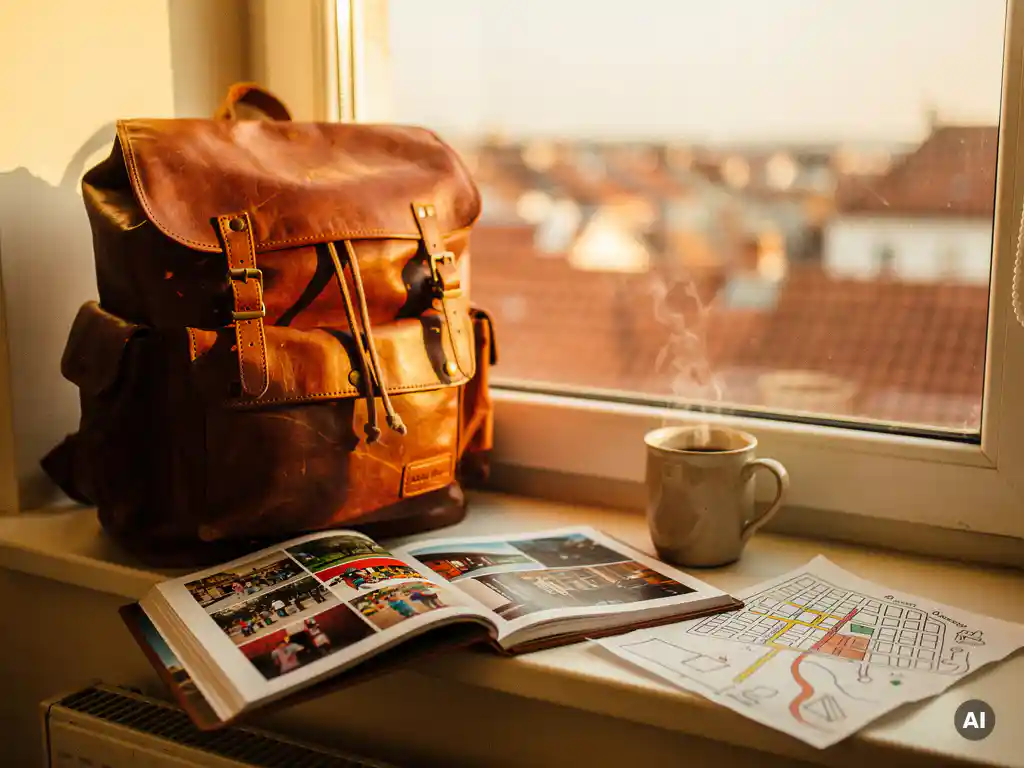
You can find everyday adventure without spending money on travel by shifting your perspective and exploring your own surroundings with curiosity. Adventure isn’t defined by distance or price tags. It’s defined by novelty, presence, and the willingness to experience something outside your usual routine. Whether you live in a city, a suburb, or a small town, opportunities for real adventure are closer than you think.
Budget constraints don’t have to mean a pause on living fully. The most meaningful adventures are often the ones that happen between big trips: the spontaneous walks, the new neighborhoods, the skills learned on a quiet Saturday. This article unpacks the most common questions people ask when they want to find adventure without leaving home or stretching their budget.
What counts as everyday adventure when travel isn’t an option?
Everyday adventure is any experience that breaks your routine, introduces novelty, or challenges you in a small but meaningful way, without requiring a passport or a plane ticket. It could be hiking a trail you’ve never taken, trying a cuisine you’ve never cooked, or exploring a part of your city you’ve always driven past. Adventure is defined by mindset, not mileage.
The key distinction is intentionality. When you travel abroad, novelty is built in. Everything is unfamiliar. At home, you have to create that sense of discovery on purpose. That might mean choosing a different route to the park, visiting a local museum you’ve never bothered to enter, or spending a morning at a farmers’ market in a neighborhood you rarely visit.
Local adventure ideas are nearly limitless once you stop filtering experiences through the lens of “is this worth it?” A solo walk through an unfamiliar part of town, a camping trip an hour from home, or an afternoon learning to identify wild plants in a local park all qualify. The bar for adventure is lower than most people assume.
Why does staying local feel less exciting than traveling?
Staying local feels less exciting than traveling primarily because of familiarity bias. Your brain stops noticing things it has already catalogued as “known.” When you travel, every detail is new, so your brain is fully engaged. At home, you’re on autopilot, which makes even interesting things feel invisible.
There’s also a psychological phenomenon sometimes called the “tourist effect”: visitors to a city notice architecture, food, and culture that locals walk past every day without a second glance. The experience itself hasn’t changed. Only the observer’s level of attention has. This is why the same city can feel electric to a first-time visitor and dull to someone who has lived there for years.
The good news is that this is entirely reversible. Approach your local area with the curiosity of a tourist by asking, “What would I want to see here if I’d just arrived?” That question can bring back the sense of discovery. Budget travel alternatives don’t require compromise. They require a different kind of attention.
What are the best ways to find adventure close to home?
The best ways to find adventure close to home combine novelty, physical engagement, and social connection, all of which you can find locally and affordably. Some of the most effective local adventure ideas include:
- Explore on foot or by bike — Pick a direction and walk or cycle somewhere you’ve never been. Set a loose goal, like reaching a body of water, a hilltop, or a neighborhood you’ve only seen on a map.
- Try a new outdoor activity — Rock climbing at a local crag, wild swimming, kayaking on a nearby river, or birdwatching in a local nature reserve all make for real adventure on a budget.
- Visit overlooked local attractions — Most towns and cities have museums, historic sites, botanical gardens, or viewpoints that residents rarely visit. Treat them as you would a landmark abroad.
- Join a local club or group — Running clubs, hiking groups, foraging walks, and photography meetups turn ordinary outings into social adventures with built-in motivation.
- Take a day trip by public transport — Commit to reaching somewhere new using only buses or trains, with no fixed plan. The constraint itself becomes part of the adventure.
- Learn something outdoors — Foraging, navigation, fire-making, or wildlife identification are skills that transform a walk into an expedition.
The common thread across all of these is low cost and high engagement. None of them require significant spending, but all of them require showing up with intention.
How can you make ordinary days feel more like travel?
You can make ordinary days feel more like travel by bringing in the rituals and mindsets that make travel feel special: novelty-seeking, slower pacing, sensory attention, and a willingness to be surprised. The goal is to recreate the mindset of a traveler, not the logistics.
Adopt a traveler’s daily habits
Travelers tend to eat at places they’ve never tried, talk to strangers, and say yes to things they’d normally skip. You can use the same habits locally. Eat lunch somewhere new. Strike up a conversation with someone at a market. Take the scenic route instead of the efficient one. These small choices add up to days that feel different from your routine.
Create a “local itinerary” for yourself
One practical technique is to plan your local day the way you’d plan a trip. Research your area as if you were a visitor. Look up what’s nearby on travel apps, check what events are happening this weekend, or pick a theme (architecture, street art, independent coffee shops) and build a loose itinerary around it. The planning itself shifts your mindset from “staying home” to “going somewhere.”
Exploring without leaving home doesn’t mean staying indoors. It means approaching the place you already live with the same openness you’d bring to somewhere new. Even a single afternoon spent this way can reset your sense of what’s possible close to home.
How do you preserve everyday adventures so they feel meaningful?
You preserve everyday adventures by documenting them on purpose, through photos, journaling, or a physical keepsake that gives the experience a permanent home. Without some form of record, even memorable days fade quickly. Preserving an adventure is also part of what makes it feel meaningful in the first place.
A few approaches that work well:
- Take photos with intention — Rather than photographing everything reflexively, choose a few moments to capture deliberately. This makes the images more meaningful and the sorting process less overwhelming later.
- Keep a short travel journal — Even three sentences at the end of a local adventure day can anchor the memory far more effectively than photos alone.
- Create a physical record — Digital photos are easy to take and easy to forget. Turning them into a printed photo book gives local adventures the same permanence usually reserved for big trips abroad.
- Share the story — Telling someone about your day, posting a photo, or sending a message to a friend reinforces the memory and gives the experience social weight.
One of the most common regrets people have about local adventures is that they didn’t document them. The photos sit on a phone, the memories blur, and the experience loses its shape. Treating local adventures with the same care you’d give a vacation, including preserving them properly, is what turns a nice afternoon into a story you’ll actually remember.
How PastBook helps you preserve your everyday adventures
We believe every adventure deserves to be remembered, not just the ones that involve long flights and expensive hotels. With PastBook, you can turn the photos on your phone into a finished photo book in minutes, with no design skills needed.
- You stay in control: In the Aplicativo PastBook, you choose your own photos, or let the app help you find them by trip, date range, location, or album. The app then lays them out into a book.
- Photos from your phone: The app uses the photos in your phone’s camera roll, on iOS or Android.
- Make it yours before you order: Swap or add photos, remove pages, change the cover, and add captions to tell the story of your day.
- Share the adventure: With the Contribution feature, friends and family who joined you can add their photos to the same book.
- Hardcover quality: Our landscape hardcover books are made with FSC-certified paper and recyclable packaging. They are printed by a local printing partner and shipped to you.
Your local adventures are worth preserving just as much as any trip abroad. Crie seu álbum de fotos today and give your everyday adventures the lasting home they deserve.