



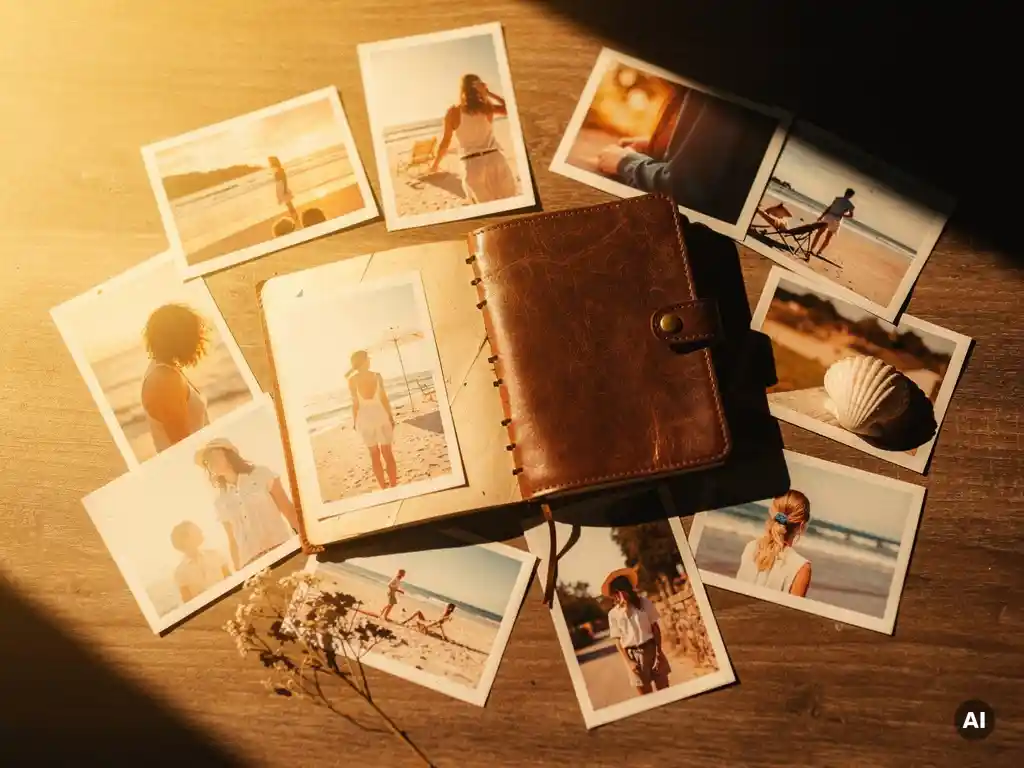
Holiday memories feel more vivid than everyday ones because your brain treats novel, emotionally charged experiences differently from routine ones. When you travel, almost everything is new – the sights, sounds, smells, and social dynamics – and that novelty triggers stronger encoding in the brain’s memory systems. The result is a rich, layered recollection that ordinary Tuesday afternoons simply cannot compete with. Below, we unpack the science behind why travel experiences stick, and what you can do to keep those memories alive long after you return home.
Why do our brains encode travel experiences so deeply?
Our brains encode travel experiences so deeply because they are packed with new information that demands active processing. The hippocampus, the brain region central to forming episodic memories, works hardest when it encounters unfamiliar environments, unexpected events, and sensory details it has never catalogued before. The more cognitive effort required to process an experience, the stronger the memory trace it leaves behind.
Everyday life runs largely on autopilot. Your commute, your morning routine, your familiar lunch spot – these experiences are processed efficiently by the brain, which means they are stored with minimal detail. Travel breaks that efficiency. A narrow street in Lisbon, the sound of a market in Marrakech, the taste of fresh pasta in Bologna – each of these forces your brain to pay close attention, and that attention is exactly what makes memories vivid and durable.
This is why even a short trip can feel like it contained a lifetime of experience. The sheer density of new information processed during travel compresses time subjectively while expanding the richness of what gets stored.
What role does emotion play in making holiday memories last?
Emotion plays a central role in making holiday memories last because the brain’s emotional centre, the amygdala, acts as a kind of memory amplifier. When you feel strong positive emotions – excitement, wonder, joy, love – the amygdala signals the hippocampus to store that moment with higher priority. Emotional experiences are essentially flagged as important, which is why they are recalled more easily and in greater detail.
Travel is naturally emotionally rich. The anticipation before a trip, the thrill of arriving somewhere new, the warmth of shared experiences with people you care about – all of these emotional peaks leave deeper impressions than neutral daily events. Even mildly stressful travel moments, like a missed connection or getting lost in an unfamiliar city, tend to be remembered vividly because they carry emotional weight.
This connection between memory and emotion also explains why nostalgia is so powerfully tied to travel. Looking back at holiday memories does not just retrieve information – it reactivates the emotional state associated with that experience, which is why revisiting old travel photos can feel genuinely moving.
What is the ‘holiday paradox’ and how does it affect memory?
The holiday paradox is the psychological phenomenon where a holiday feels short while you are living it but seems much longer in retrospect. This happens because time perception during an experience is driven by how much attention you are paying, while memory of that same period is shaped by how many distinct moments were stored. Travel creates an abundance of distinct, memorable moments, so looking back, the trip feels expansive.
In contrast, a typical week at home passes quickly in memory because so little of it is encoded as distinct episodes. Monday blurs into Tuesday because nothing meaningfully different happened to separate them in your mind. A week abroad, however, might contain dozens of genuinely different scenes, each encoded as its own memory – making the week feel, in retrospect, like it lasted much longer than it did.
Understanding the holiday paradox has a practical implication: if you want a trip to feel rich and long-lasting in memory, seek out variety and novelty within it. New restaurants, unexpected detours, spontaneous conversations with locals – these create the distinct memory episodes that make a holiday feel full when you look back on it.
How does novelty trigger stronger memory formation?
Novelty triggers stronger memory formation because the brain releases dopamine when it encounters something new and unexpected. This dopamine release directly enhances the consolidation of memories in the hippocampus, essentially telling the brain that the new information is worth keeping. The more unfamiliar an experience, the more attentive and alert you become – and heightened attention is one of the most reliable predictors of strong memory encoding.
This is why your first visit to a destination tends to be remembered more vividly than subsequent visits. The first time you see the Eiffel Tower, your brain is processing an entirely new visual and emotional experience. By the third visit, the scene is familiar and the brain processes it with less effort – and therefore stores it with less detail.
Novelty does not have to mean exotic destinations, either. Even small doses of the unfamiliar – a new route through a city, a food you have never tried, a conversation in a language you are just beginning to learn – can activate the brain’s novelty-detection system and produce richer memories than passive, routine experience.
Why do holiday memories fade faster than they feel?
Holiday memories fade faster than they feel because memory is not a recording – it is a reconstruction. Every time you recall a memory, you are rebuilding it from stored fragments, and without regular revisiting, those fragments degrade. The vivid, emotionally charged quality of a travel memory is most intense immediately after the experience and diminishes steadily without reinforcement.
This fading is accelerated by the return to routine. When you come home from a trip, the demands of everyday life quickly fill your mental landscape, and the travel memories that felt so immediate begin to compete with newer, more recent information. Details that seemed unforgettable – the exact colour of the sea, the sound of a particular street – can blur within weeks.
There is also the matter of context. Travel memories are rich partly because they are tied to a specific place, time, and emotional state. Once you are removed from that context, the sensory cues that would normally trigger recall are no longer present, which is why a smell or a song from a trip can suddenly bring it flooding back – those cues are doing the retrieval work your everyday environment cannot.
How can preserving travel photos help keep holiday memories vivid?
Preserving travel photos helps keep holiday memories vivid by giving you reliable retrieval cues that counteract natural memory decay. Photographs act as anchors – each image reconnects you to the sensory and emotional context of the moment it captured. Regularly revisiting your travel photos does not just remind you that something happened; it actively re-engages the emotional memory associated with the experience, which helps maintain its richness over time.
Research in cognitive psychology consistently supports the idea that external memory aids – photos, journals, mementos – extend the lifespan of episodic memories. Without them, the fine-grained detail of a travel experience tends to compress into a general impression within months. With them, specific moments remain accessible and emotionally resonant for years.
The key is making those photos easy to revisit. Images buried in a camera roll or scattered across social platforms are far less likely to be looked at than photos that have been curated, organised, and given a physical or accessible digital form. The act of organising your travel photos into a coherent narrative – a timeline, a story, a collection – also reinforces the memories themselves, because it requires you to actively re-engage with them.
A printed photo book is one of the most effective ways to achieve this. Unlike a digital folder, a physical book invites you to pick it up, share it, and revisit it naturally – and each time you do, you are strengthening the memory traces that make holiday experiences feel vivid long after they end.
How PastBook helps you hold onto holiday memories
We built PastBook specifically for this challenge: turning scattered travel photos into something you will actually revisit. Here is how we make it effortless:
- Curadoria com IA: Our platform automatically selects your best travel photos from a chosen date range, location, or album – removing duplicates and low-quality images so only the highlights make it in.
- Pronto em menos de 60 segundos: From scattered photos to a print-ready layout in less than a minute. No blank pages, no manual design work.
- Importar de qualquer lugar: Pull photos from Instagram, Facebook, Google Drive, Dropbox, or directly from your phone – wherever your travel memories are stored.
- Qualidade de impressão premium: Our photo books are printed on FSC-certified paper in softcover, hardcover, and premium hardcover formats, and shipped worldwide through a global network of local printers.
- A keepsake you will actually use: A physical book on your shelf is far more likely to be revisited than a folder on your phone – and every time you open it, you are reinforcing those vivid travel memories.
Do not let your best travel moments fade into a blur of unsorted images. Create your travel photo book today and give your holiday memories the permanence they deserve.