



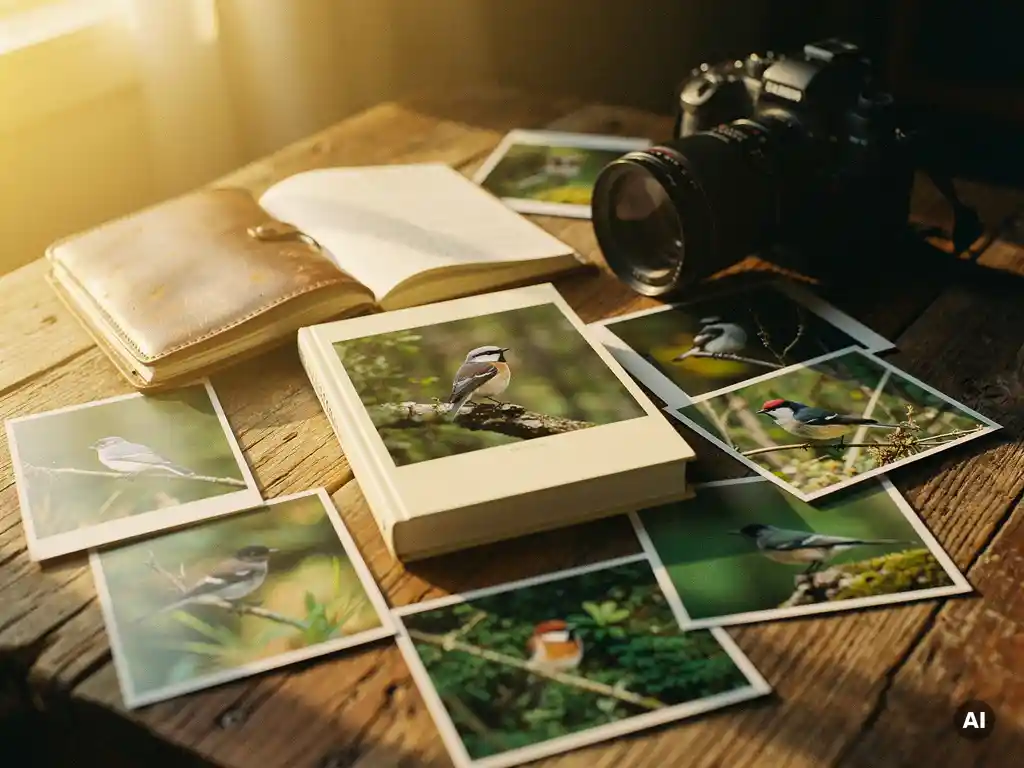
Start compiling your birdwatching photos into a book when you have at least 30 to 50 quality images that tell a coherent story, whether that’s a single memorable trip, a full year of sightings, or a personal milestone like completing a life list. The key trigger is not a fixed number but a sense of narrative: when your photos feel like a collection rather than a random assortment, you’re ready. The questions below walk through everything from photo selection to the easiest way to get your bird photography book printed.
How many birdwatching photos do you need before making a book?
You need a minimum of around 30 birdwatching photos to fill a meaningful book, though 60 to 100 images give you the flexibility to create a visually rich, well-paced layout. Quality matters far more than quantity: a tightly curated collection of sharp, well-composed shots will always produce a better bird photography book than a large archive of mediocre images.
Our hardcover photo books include the first 24 pages, which comfortably fit 40 to 60 images when you mix single-page feature shots with multi-photo spreads. If you’re aiming for a more substantial keepsake, perhaps documenting an entire year of birding or a multi-destination trip, 100 to 150 images gives you the depth to include habitat shots, behavioral sequences, and species close-ups without the book feeling repetitive.
The practical rule: if you can look at your folder and immediately spot 30 or more photos you’d be proud to show someone, you have enough to start.
What milestones make a natural starting point for a bird photo book?
The most natural starting points for a birdwatching photo book are meaningful milestones that already give your collection a built-in story arc. These include completing a life list goal, finishing a dedicated birding trip, reaching a personal species count, or closing out a full calendar year of sightings.
Milestones work so well because they provide a beginning, middle, and end, the same structure that makes any book satisfying to read. Here are some of the most compelling triggers birders use:
- Completing a life list target – reaching 100, 200, or 500 species is a landmark worth commemorating in print
- Returning from a dedicated birding trip – a focused destination like Costa Rica, the Scottish Highlands, or the Everglades produces a natural, self-contained story
- End of a birding season – spring migration or the winter season each have their own character and cast of species
- A year in review – documenting every species photographed across 12 months captures the full rhythm of your local patch
- A personal first – your first raptor, first seabird colony, or first international birding trip all deserve their own book
These milestones also make the finished book a far more meaningful gift for fellow birders or family members who want to understand your passion.
Should you organize birdwatching photos by species, location, or date?
The best organizational approach for a birdwatching photo book depends on the story you want to tell. Organizing by Standort works best for trip-based books, organizing by species suits reference-style collections, and organizing by date is ideal for year-in-review or seasonal books. Many birders combine two of these approaches for a richer result.
Organizing by location
A location-based structure mirrors the experience of actually being there: you move through habitats, encounter species in context, and capture the atmosphere of a place. This approach works especially well for travel-focused bird photography books where the destination is as important as the birds themselves. Each chapter can represent a different reserve, country, or habitat type.
Organizing by species or taxonomy
A species-based layout, sometimes following taxonomic order (waders, raptors, passerines), creates a more encyclopedic feel. This suits birders who want a reference-style book they can return to again and again. It works particularly well if you’ve built up a strong archive across multiple years and want to compile your best shot of each species into a single showcase volume.
Organizing by date or season
Chronological or seasonal organization tells the story of your birding year as it unfolded. It captures the anticipation of spring arrivals, the abundance of summer, and the quiet drama of winter. This approach is the most personal and diary-like, and it tends to resonate most with readers who followed your sightings in real time.
When is the best time of year to compile a birdwatching photo book?
The best time of year to compile a birdwatching photo book is at the natural close of a birding cycle, most commonly the end of the calendar year in December, or at the close of spring migration in late May or early June. These points mark a clear ending to a chapter, making it easier to look back and curate with perspective.
December and January are particularly strong moments. The slower pace of winter birding gives you time to sit with your archive, and the turn of the year creates a natural sense of reflection: you’re ready to celebrate what you saw in 2025 before moving into 2026. Ordering a book in January also means it arrives just as the new birding year is beginning, giving you a tangible record of the year just gone.
Post-trip is another highly productive window. The days immediately after returning from a birding holiday are when your enthusiasm is highest and your memories are sharpest. Compiling your photos while the experience is still fresh leads to better curation and more meaningful captions.
How do you choose which bird photos to include in a book?
Choose birdwatching photos for your book by applying three filters in sequence: technical quality first, behavioral interest second, and narrative contribution third. A photo that passes all three filters earns its place; a photo that only passes one probably doesn’t.
Here’s how to apply each filter in practice:
- Technical quality: Is the bird sharp, well-exposed, and free from distracting clutter? A slightly soft image of a rare species is still worth including, but a blurry duplicate of a common bird is not.
- Behavioral interest: Does the image show something happening – feeding, in flight, displaying, interacting? Action shots and behavioral moments are far more engaging in print than static perched birds, even if the perched shots are technically cleaner.
- Narrative contribution: Does this photo add something the book doesn’t already have? If you have five similar shots of the same species, pick the strongest one and cut the rest. Variety across species, habitats, and moments keeps the reader turning pages.
It also helps to remove duplicates ruthlessly. Birders tend to shoot in bursts, which means archives fill up with near-identical frames. Keeping only the single best version of each moment is one of the most important editing decisions you’ll make.
What’s the easiest way to turn birdwatching photos into a printed book?
The easiest way to turn birdwatching photos into a printed book is to use an app that helps with the layout, so you spend your time choosing the photos you love rather than wrestling with design software.
Traditional approaches, such as desktop publishing tools or manual scrapbooking, can take days or weeks of layout work. For most birders, that friction is the reason a beautiful archive of images never makes it into print. A tool that handles the layout for you removes that barrier.
How PastBook helps you create a birdwatching photo book
Your best bird photos are probably sitting on your phone, waiting for a home. We built PastBook to make turning them into a printed book simple, with no design skills needed. Here’s how it works:
- You choose the photos: in the PastBook app, you pick your own shots from your phone’s camera roll on iOS or Android. The app can also help you find photos by trip, date range, location, or album.
- Sofortiges Layout once you’ve chosen your photos, the app lays them out into a book for you, so there are no blank pages to fill by hand.
- Edit before you order: swap or add photos, remove pages, change the cover, and add captions, such as species names and locations.
- Teile die Erinnerungen: with the Contribution feature, friends and family who joined you on a birding trip can add their photos to the same book.
- Hardcover books: choose a Small Hardcover (8.5″ × 6″) from $19.99 or a Large Hardcover (12″ × 8.5″) from $34.99. Both are landscape books made with FSC-certified paper. The price includes the first 24 pages, and extra pages cost a little more.
- Printed near you: a local printing partner prints your book and ships it to you. You’ll see the shipping cost at checkout.
Ready to give your birdwatching photos the home they deserve? Create your bird photo book with PastBook today and turn your favorite sightings into a book you can hold.