











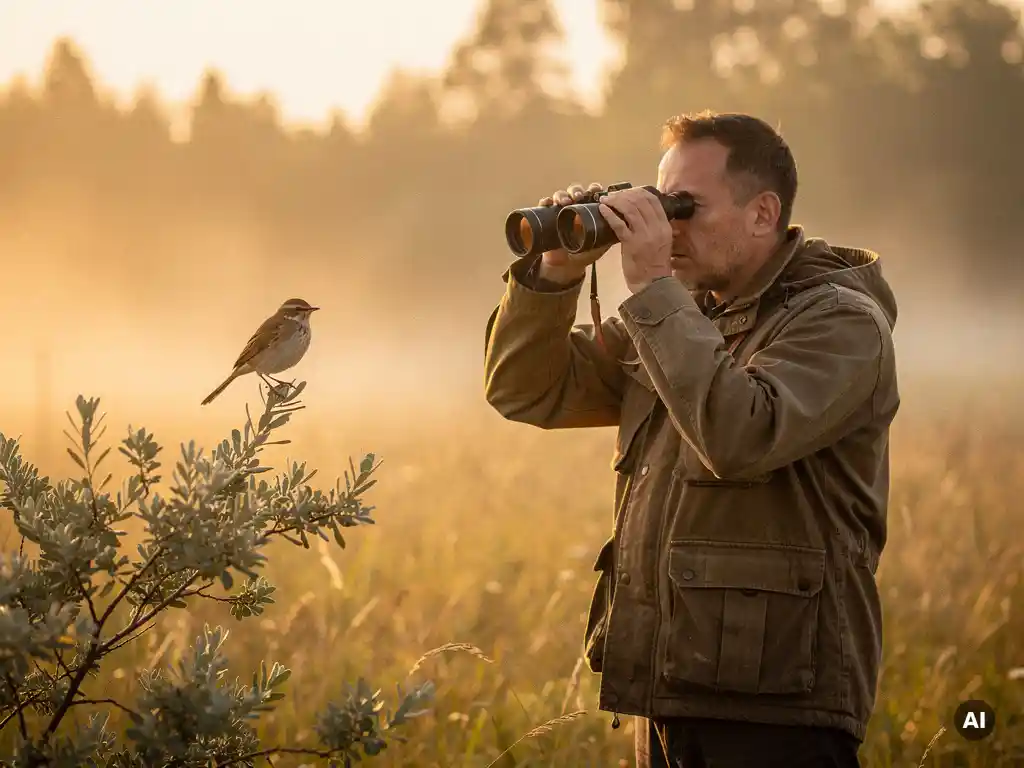
Birdwatching is considered a mindfulness practice because it naturally pulls your attention into the present moment. Spotting, identifying, and listening to birds requires focused, sensory awareness, the same mental state that formal mindfulness training works hard to cultivate. It offers a rare combination of gentle physical activity, immersion in nature, and quiet concentration that makes it one of the most accessible and enjoyable forms of mindful living available to anyone.
From reducing everyday stress to building a sustainable daily habit, birdwatching delivers genuine mental health benefits that science and personal experience consistently support. The sections below unpack exactly how and why it works so well.
How does birdwatching activate a mindful state of mind?
Birdwatching activates a mindful state of mind by demanding full sensory engagement in the present moment. To spot a bird, you must slow down, quiet your thoughts, and tune your eyes and ears to your immediate surroundings. This automatic shift away from rumination and toward present-moment awareness is the core mechanism of mindfulness, and birdwatching triggers it without any formal technique or training.
Unlike many mindfulness exercises that ask you to sit still and focus on breath, birdwatching gives your attention something genuinely interesting to anchor to. The unpredictability of wildlife keeps you engaged. You never know what will appear next, which means your mind stays alert and present rather than drifting back to your to-do list or yesterday’s worries.
This state is sometimes called soft fascination, a gentle, effortless form of attention that restores mental energy rather than depleting it. Birds, with their movement, color, and sound, are a natural trigger for this state. Your brain shifts from the high-effort, analytical mode of daily work into a quieter, more receptive mode, which is precisely the mental space mindfulness practice aims to reach.
What mental health benefits does birdwatching provide?
Birdwatching provides a range of meaningful mental health benefits, including reduced stress and anxiety, improved mood, greater emotional resilience, and a stronger sense of calm and wellbeing. These benefits come from the combination of time spent in nature, focused attention, physical movement, and the quiet pleasure of observing wildlife, all of which support psychological health in complementary ways.
The birdwatching mental health benefits most commonly reported include:
- Stress relief: Spending time outdoors and focusing on nature lowers cortisol levels and calms the nervous system, making birdwatching an effective form of stress relief.
- Reduced anxiety: The gentle, absorbing nature of birdwatching interrupts anxious thought patterns and replaces them with present-moment awareness.
- Improved mood: Exposure to birdsong and green spaces has a measurable positive effect on emotional state, even after short periods of time.
- Sense of purpose and achievement: Identifying a new species or returning to a familiar spot creates a quiet sense of accomplishment that builds over time.
- Social connection: Birdwatching communities are welcoming and inclusive, offering opportunities for meaningful connection with like-minded people.
What makes birdwatching particularly valuable for mental health is that it requires no special skill level to benefit from it. You do not need to identify every bird correctly to experience the calming effect of being outside, paying attention, and connecting with the natural world around you.
How is birdwatching different from traditional meditation?
Birdwatching differs from traditional meditation in that it is an active, outward-focused practice rather than a still, inward one. Traditional meditation typically asks you to close your eyes, focus on your breath, and observe your own thoughts. Birdwatching asks you to open your eyes, direct your attention outward, and observe the living world. Both lead to present-moment awareness, but they arrive there by opposite routes.
This distinction matters for people who struggle with conventional meditation. Sitting still and watching thoughts pass can feel frustrating or even anxiety-inducing for some individuals. Birdwatching sidesteps that friction entirely. The birds provide an external focus that naturally holds attention, making the meditative state feel effortless rather than effortful.
There is also a physical dimension to birdwatching that traditional meditation lacks. Walking through a park, woodland, or coastal path while scanning for birds combines light exercise with mental stillness, a combination that many people find more sustainable and enjoyable than sitting in formal meditation. For those who want the benefits of a mindfulness practice without the structure or discipline of birdwatching meditation techniques, birdwatching offers a genuinely accessible alternative.
Why do nature sounds play such a big role in mindful birdwatching?
Nature sounds play a central role in mindful birdwatching because birdsong is one of the most powerful auditory triggers for a calm, present mental state. Listening to birds requires the same focused, non-judgmental attention that mindfulness training develops, and research consistently shows that natural soundscapes reduce physiological stress markers and promote psychological restoration.
Birdsong in particular has a quality that is both complex enough to hold attention and gentle enough not to overwhelm it. Each species has a distinct call, which gives attentive listeners an endless, evolving puzzle to engage with. This keeps the mind occupied with the present moment rather than replaying past events or anticipating future ones.
Beyond identification, the simple act of listening to birds shifts your awareness from visual and cognitive processing to auditory and sensory experience. This shift slows mental activity in a way that feels natural rather than forced. Many experienced birdwatchers describe hearing the first birdsong of a morning walk as the moment they feel genuinely present, not because they are trying to be mindful, but because the sound draws them there instinctively.
Can birdwatching be a daily mindfulness habit?
Yes, birdwatching can absolutely become a daily mindfulness habit, and it is one of the most sustainable options available precisely because it requires so little equipment, preparation, or dedicated time. A ten-minute walk in a local park, a few minutes listening from a window, or a quiet moment in a garden before the day begins are all enough to engage the same attentive, present-moment awareness that makes birdwatching a mindfulness practice.
Building it as a daily habit works best when you attach it to an existing routine. Morning coffee on the patio, a lunchtime walk, or a wind-down stroll after work are all natural anchors for a short birdwatching session. Over time, the practice becomes a reliable mental reset, a moment each day when you step out of your internal dialogue and reconnect with the world around you.
The beauty of birdwatching as a daily mindfulness habit is that it grows richer with repetition. You begin to notice seasonal changes, recognize familiar birds, and build a quiet familiarity with your local environment. That deepening relationship with nature adds a layer of meaning that goes beyond stress relief, it becomes a practice of noticing, appreciating, and staying connected to the present moment in a way that accumulates genuine wellbeing over time.
How PastBook helps you hold onto the memories you make outdoors
Birdwatching and mindfulness practices often go hand in hand with a deeper appreciation for the moments and places that matter most. When you spend time in nature, whether on a weekend birdwatching trip, a family walk, or a quiet holiday in the countryside, you naturally capture photos that deserve more than sitting forgotten on your phone.
That is where we come in. At PastBook, we make it effortless to turn those meaningful moments into something beautiful and lasting:
- KI-gestützte Kuratierung Our app automatically selects your best photos, removes duplicates, and arranges them into a professionally designed photo book in under 60 seconds.
- Keine Designkenntnisse erforderlich: You simply approve the result and customize if you want to, the hard work is already done.
- Perfect for travel and nature memories: The app detects trips via photo metadata, so your birdwatching weekend or nature retreat becomes a ready-made album with a single tap.
- Gedruckt und weltweit geliefert: A high-quality, tangible keepsake shipped directly to your door.
Just as birdwatching encourages you to slow down and appreciate the present, a photo book gives those moments a permanent home. Erstelle dein Fotoalbum and turn your favorite outdoor memories into something you can hold, revisit, and share for years to come.