











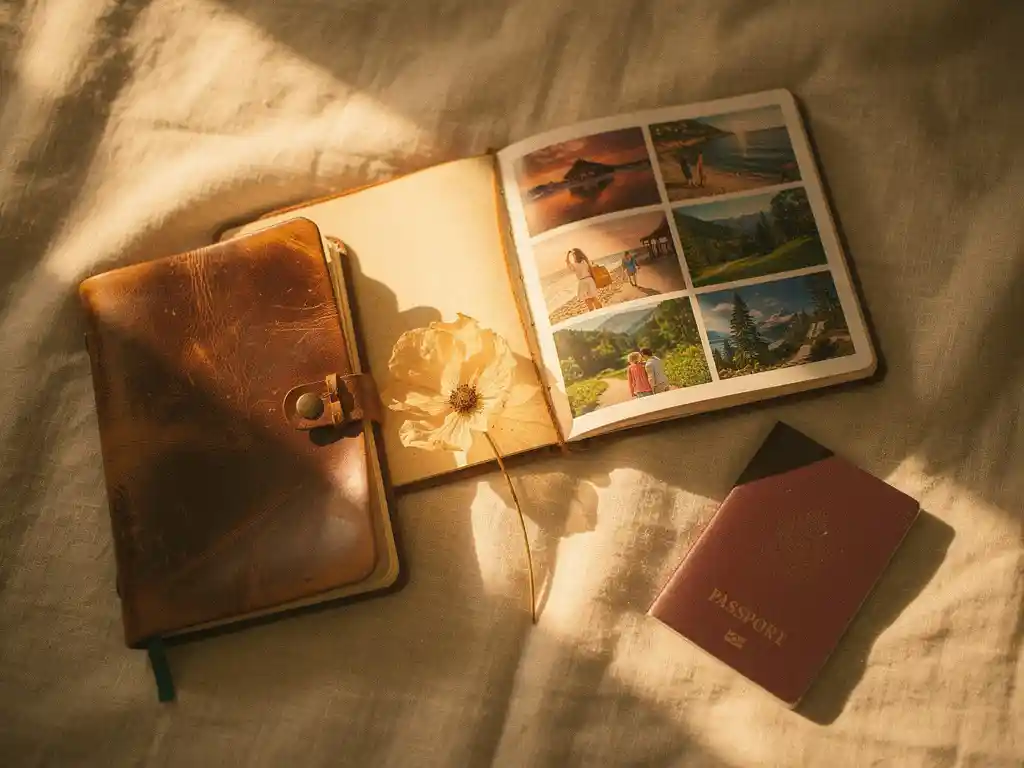
Travel memories fade when daily life takes over because the brain naturally prioritises new information over past experiences. The good news is that with the right habits and keepsakes, you can preserve those memories in ways that make them feel just as vivid years later. Below, we answer the most common questions travellers ask about keeping their adventures alive long after they get home.
Why do travel memories fade so quickly after you get home?
Travel memories fade quickly because the brain is wired to deprioritise experiences that are no longer actively relevant to your daily life. When you return home, your mind shifts focus to routines, responsibilities, and new stimuli, which pushes travel experiences further into the background. Without reinforcement, even the most extraordinary trips can blur into a vague impression within weeks.
This process is sometimes called the “fading affect bias” in memory research, and it is especially strong for positive emotional experiences. The sights, sounds, and feelings of a trip feel sharp in the days immediately after returning, but without something to anchor them, they become harder to recall clearly. The longer you wait to revisit those memories, the more details slip away.
There is also a practical factor: most travel photos sit unseen in a camera roll or cloud storage folder, never looked at again. If you never revisit the images, you never reinforce the memories they capture. This is why the way you store and engage with your travel photos matters just as much as taking them in the first place.
What are the best ways to preserve travel memories long-term?
The most effective ways to preserve travel memories long-term involve creating physical or structured records that you will actually revisit. Digital files stored in a folder rarely get opened, but tangible objects and curated collections invite you to relive experiences again and again. The key is choosing a format that fits naturally into your life after the trip ends.
Here are some of the most reliable approaches travellers use:
- Printed photo books: A curated travel photo book sits on a shelf, gets pulled out for guests, and holds up for decades without needing a device or password.
- Travel journals: Writing down stories, impressions, and small details immediately after a trip captures things that photos cannot, like the smell of a market or a conversation with a stranger.
- Framed prints or photo tiles: Displaying a favourite travel image in your home keeps the memory visible and emotionally present every day.
- Annual calendars: A photo calendar built from a year’s worth of travel images gives you twelve months of visual reminders.
- Dedicated albums or shared collections: Organising photos into clearly labelled albums, whether digital or printed, makes it far more likely you will actually look at them later.
The common thread across all of these is intentionality. Memories are preserved when you take a deliberate step to capture and organise them, rather than leaving photos scattered across multiple apps and devices.
How do you organise hundreds of travel photos without spending hours?
The fastest way to organise hundreds of travel photos without spending hours is to use a tool that automates the sorting process for you. Rather than manually reviewing every image, selecting the best ones, and arranging them into albums, AI-powered platforms can analyse your photos by date, location, and quality, then group them automatically. What used to take an entire weekend can now take under a minute.
If you prefer a more hands-on approach, a few simple habits make the process much more manageable:
- Sort by date immediately after the trip, while the context is still fresh in your mind.
- Delete obvious duplicates and blurry shots in one dedicated session rather than putting it off indefinitely.
- Create one folder or album per trip with a clear name and date range, so you can find it easily later.
- Choose your best 20 to 30 images from each trip as a highlight set, separate from the full archive.
- Back up to a second location, whether cloud storage or an external drive, so no memories are lost if a device fails.
The biggest mistake most travellers make is waiting too long. The longer photos sit unsorted, the more overwhelming the task feels, and the more likely it is to never happen at all. Acting within the first week after a trip dramatically increases the chance that your travel photos actually get organised and preserved.
What makes a travel photo book better than a digital album?
A travel photo book is better than a digital album because it is a finished, permanent object that does not require a screen, an app, or an internet connection to enjoy. Digital albums are easy to create but rarely revisited, while a printed photo book sits on a shelf, gets passed around at family gatherings, and survives long after the platform it was stored on has changed or disappeared.
There are several reasons why physical photo books hold memories more powerfully than digital collections:
- They are curated by design. A photo book forces you to select and arrange your best images, which in itself deepens your connection to the trip.
- They are tangible and shareable. You can hand a photo book to a grandparent, a friend, or a child without any technical barriers.
- They are emotionally resonant. Research in psychology consistently shows that physical objects carry stronger emotional associations than digital files.
- They last for decades. A well-made printed book on quality paper will outlast any smartphone, app, or social media platform.
- They make exceptional gifts. A travel photo book as a gift communicates thoughtfulness and effort, even when the process of creating it was effortless.
Digital albums absolutely have their place for sharing and storage, but as a way to truly relive travel memories, a printed photo book offers something a screen simply cannot replicate.
When is the best time to create a travel photo book?
The best time to create a travel photo book is as soon as possible after returning from a trip, ideally within the first week. This is when the memories are sharpest, the emotional connection to the photos is strongest, and the motivation to do something meaningful with them is highest. Waiting weeks or months means the holiday feeling fades, and the task begins to feel like a chore rather than a pleasure.
There is a well-known emotional window right after a trip ends when people feel the most nostalgic and reflective about their experiences. Capturing that feeling in a photo book while it is still fresh produces a more meaningful result, and the process itself becomes an enjoyable extension of the trip rather than an administrative task.
That said, there are other natural moments when creating a travel photo book makes perfect sense:
- At the end of the year, when people naturally feel nostalgic and want to look back at the highlights of the past twelve months.
- Before a significant anniversary or birthday, when a travel photo book makes a deeply personal gift.
- When a child is growing up, as a way to document family holidays before the years blur together.
- After a once-in-a-lifetime trip, such as a honeymoon, a bucket-list destination, or a long sabbatical.
The honest truth is that the perfect time is always sooner than you think. The photos are already there. The only thing standing between you and a finished keepsake is getting started.
How PastBook helps you keep travel memories alive
We built PastBook specifically for travellers who want to preserve their adventures without spending hours organising photos or designing layouts. Our AI-powered platform does the heavy lifting for you, so you can go from a camera roll full of travel photos to a beautifully curated, print-ready photo book in under 60 seconds.
Here is what makes our platform the easiest way to create a travel photo book:
- Smart photo selection: Our AI analyses image quality and context, removes duplicates and blurry shots, and picks your best travel photos automatically.
- Flexible import options: Pull photos from Instagram, Facebook, Google Drive, Dropbox, or directly from your phone, no matter where your travel memories are stored.
- Location and date-based albums: Select a specific trip, date range, or destination and we instantly build a curated album around it.
- Premium print quality: Books are printed on FSC-certified paper in soft cover, hardcover, and premium hardcover formats, in A4 or A5 sizes, and shipped worldwide.
- Collaborative albums: Friends and family who travelled with you can contribute their own photos in one click, so no great shot gets left out.
Whether you just returned from a weekend getaway or you have years of travel photos waiting to be turned into something lasting, we make it effortless. Create your travel photo book today and relive your favourite adventures in print.