











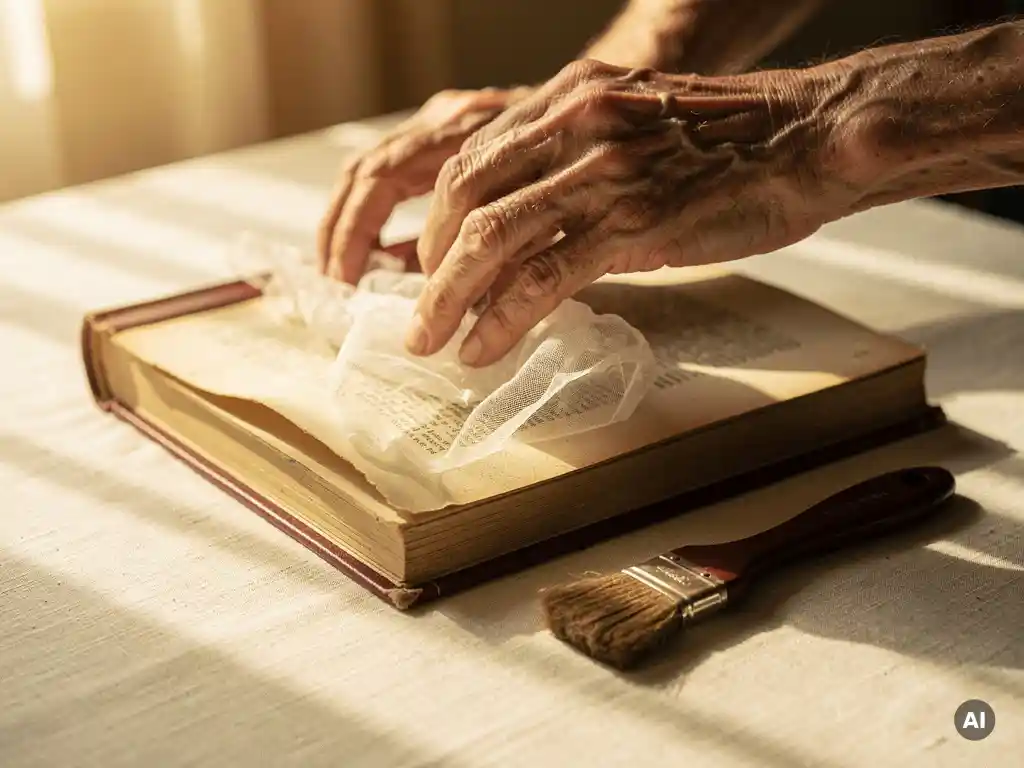
To preserve old yearbooks without damaging them, store them upright or flat in a cool, dry, and dark environment, ideally in acid-free boxes or archival sleeves. The key is protecting them from the three main threats: light, moisture, and unstable temperatures. This guide walks through the most important steps, from storage conditions and cleaning methods to digitizing and knowing when to call a professional.
What causes old yearbooks to deteriorate over time?
Old yearbooks deteriorate primarily due to paper acidity, light exposure, humidity fluctuations, and physical handling. Most yearbooks printed before the 1990s were made with wood-pulp paper that contains natural acids. Over time, these acids break down the paper fibers, causing pages to yellow, become brittle, and eventually crumble, a process called acid hydrolysis.
Beyond the paper itself, several environmental and physical factors accelerate the damage:
- Light exposure: Ultraviolet rays from sunlight and fluorescent lighting fade ink, photographs, and covers rapidly
- Humidity and moisture: High humidity promotes mold growth and warps pages; low humidity makes paper brittle
- Temperature swings: Repeated cycles of heat and cold cause paper to expand and contract, weakening the binding
- Pests: Silverfish and other insects feed on the starch in paper and adhesive in bindings
- Physical stress: Stacking heavy books on top, forcing open a stiff spine, or handling with oily hands all cause incremental damage
Understanding these causes is the foundation of effective yearbook conservation. Once you know what is attacking the book, you can take targeted steps to slow or stop the process.
What are the best storage conditions for old yearbooks?
The best storage conditions for old yearbooks are a stable temperature between 60 and 70 degrees Fahrenheit, relative humidity between 30 and 50 percent, and complete darkness. Consistency matters more than perfection, a slightly warmer room that stays the same temperature year-round is far less damaging than a space that swings between extremes.
Here is what to prioritize when choosing a storage location:
- Avoid attics and basements: Both are notorious for temperature and humidity fluctuations. Attics bake in summer; basements are prone to dampness and flooding
- Choose interior rooms: A climate-controlled closet inside the main living area of your home is often the safest and most practical option
- Keep away from exterior walls: These walls conduct outside temperature changes and can harbor condensation
- Block light completely: Store yearbooks inside opaque boxes rather than on open shelves where light can reach them
- Ensure airflow: Avoid sealed plastic containers, which trap moisture. Instead, use archival boxes that allow gentle air circulation
If you are storing multiple yearbooks together, stand them upright like books on a shelf rather than stacking them flat, unless the binding is already weak or the covers are warped, in which case lying them flat with no weight on top is safer.
What materials should you use to store and protect yearbooks?
Use acid-free, archival-quality materials to store and protect old yearbooks. This means acid-free boxes, tissue paper, and, if desired, polyester (Mylar) sleeves for particularly fragile covers. Avoid standard cardboard boxes, plastic bags, rubber bands, and newspaper, all of these introduce acids or trap moisture that accelerates deterioration.
The most useful archival materials for yearbook storage include:
- Acid-free clamshell boxes: These rigid boxes protect against dust, light, and physical pressure while allowing the book to breathe
- Acid-free tissue paper: Use it to wrap individual yearbooks before placing them in boxes, providing a buffer against surface abrasion
- Polyester film (Mylar) sleeves: These are ideal for protecting fragile or flaking covers without introducing harmful off-gasses
- Acid-free interleaving sheets: If pages are sticking together or photographs are at risk of transferring, place these sheets between pages
- Cotton gloves: Wear these when handling old yearbooks to prevent skin oils from transferring to paper and photographs
All of these materials are widely available from archival supply companies and many online retailers. The investment is modest compared to the cost of losing an irreplaceable memory to preventable damage.
How do you clean a damaged or dirty yearbook without causing more harm?
To clean a dirty yearbook safely, use a soft, dry brush to remove loose dust and debris, and a white vinyl eraser very gently on surface grime on paper pages. Never use water, household cleaning products, or adhesive tape on a damaged yearbook, moisture and chemical residues cause far more harm than the dirt you are trying to remove.
Follow these steps for safe, minimal-intervention cleaning:
- Start with dry tools: Use a soft-bristle brush (a clean, unused paintbrush works well) to sweep dust away from the cover and page edges, always brushing outward from the spine
- Erase surface soiling carefully: A white vinyl eraser, not a pink rubber one, can lift light pencil marks or surface grime from paper. Use the lightest possible pressure and test on an inconspicuous area first
- Do not flatten warped pages by force: If pages are wavy or cockled, place the closed book under light, even weight in a dry environment and allow it to adjust gradually over days
- Address mold with extreme caution: If you see mold, isolate the yearbook immediately to prevent spread. Allow it to dry completely in a well-ventilated space, then gently brush away dry mold spores outdoors while wearing a mask. Do not attempt to treat active mold yourself
- Never use tape for repairs: Pressure-sensitive tapes, including masking tape and clear tape, leave permanent adhesive stains and are extremely difficult to reverse. A conservator can make proper repairs
The guiding principle of yearbook conservation is reversibility, only take actions that can be undone, and when in doubt, do nothing until you can consult a professional.
Should you digitize old yearbooks to preserve the memories?
Yes, digitizing old yearbooks is one of the most effective ways to protect the memories they contain, even if you also preserve the physical book. A digital copy ensures that the photographs, signatures, and captions survive even if the original is eventually lost to age, accident, or disaster. Digitization does not replace physical preservation, it complements it.
There are several practical approaches to digitizing a yearbook:
- Flatbed scanner: This produces the highest quality results for individual pages. Use a resolution of at least 300 DPI for general pages and 600 DPI or higher for photographs
- Smartphone scanning apps: Apps that use your phone’s camera and apply automatic correction can produce good results for quick digitization, though quality is lower than a dedicated scanner
- Professional scanning services: Many local print shops and archival services offer book scanning, which is especially useful for fragile yearbooks that cannot be pressed flat on a home scanner
Once digitized, store copies in multiple locations, an external hard drive, a cloud service, and ideally a second physical location. Digital files can also be shared with family members, classmates, or school archives, giving the memories a much wider reach.
If you want to go a step further and turn those scanned images into something tangible and shareable, creating a printed photo book from your digitized yearbook photos is a meaningful way to celebrate the memories in a modern format that will last for decades.
When should you take a yearbook to a professional conservator?
Take a yearbook to a professional conservator when it has active mold, significant structural damage to the binding, severely fragile or detached pages, or when it holds high sentimental or historical value that makes amateur repair too risky. Professional conservators have access to specialized materials and techniques that are not available to the general public and can stabilize damage that home methods cannot safely address.
Specific situations that warrant professional help include:
- Active or extensive mold: Mold can spread rapidly and requires controlled treatment to stop without further damaging the paper
- Broken or detached spines: Rebinding a book incorrectly can destroy its original structure and reduce its value
- Water damage: If a yearbook has been wet, a conservator can dry and stabilize it using methods that minimize tide lines and warping
- Flaking or lifting photographs: Photographs adhered to pages with deteriorating adhesive need careful intervention to prevent total loss
- Significant historical importance: If a yearbook belongs to a school archive or has community significance, professional conservation is the appropriate standard
To find a qualified conservator, look for members of the American Institute for Conservation (AIC) or the equivalent professional body in your country. Many offer free initial consultations, and some specialize specifically in paper and book conservation.
How PastBook helps you relive the memories inside old yearbooks
Preserving the physical yearbook is important, but the memories inside deserve to live beyond the fragile pages. We at PastBook make it easy to transform those scanned yearbook photos and portraits into a beautifully designed keepsake you can share with family and friends.
- AI-powered curation: Our platform automatically selects and arranges your best photos into a print-ready layout in under 60 seconds
- Multiple formats: Choose from soft cover, hardcover, or premium hardcover in A4 or A5 sizes, with between 6 and 500 pages
- Premium quality: All books are printed on FSC-certified paper and shipped worldwide through our global printing network
- No design skills needed: Upload your digitized yearbook images and let our intelligent platform do the layout work for you
Whether you want to create a reunion gift, share a class’s history with family, or simply give those fading memories a permanent new home, we are here to help. Create your photo book today and turn your yearbook memories into something that lasts.
Related Articles
- How can cooking local dishes help you relive a favourite trip?
- What happens when a Facebook account is deleted, what you lose, and how to save the photos before you do it?
- How do you turn a road trip into a memory?
- How do you make a meaningful gift from travel photos?
- How do you share travel memories with friends and family?