











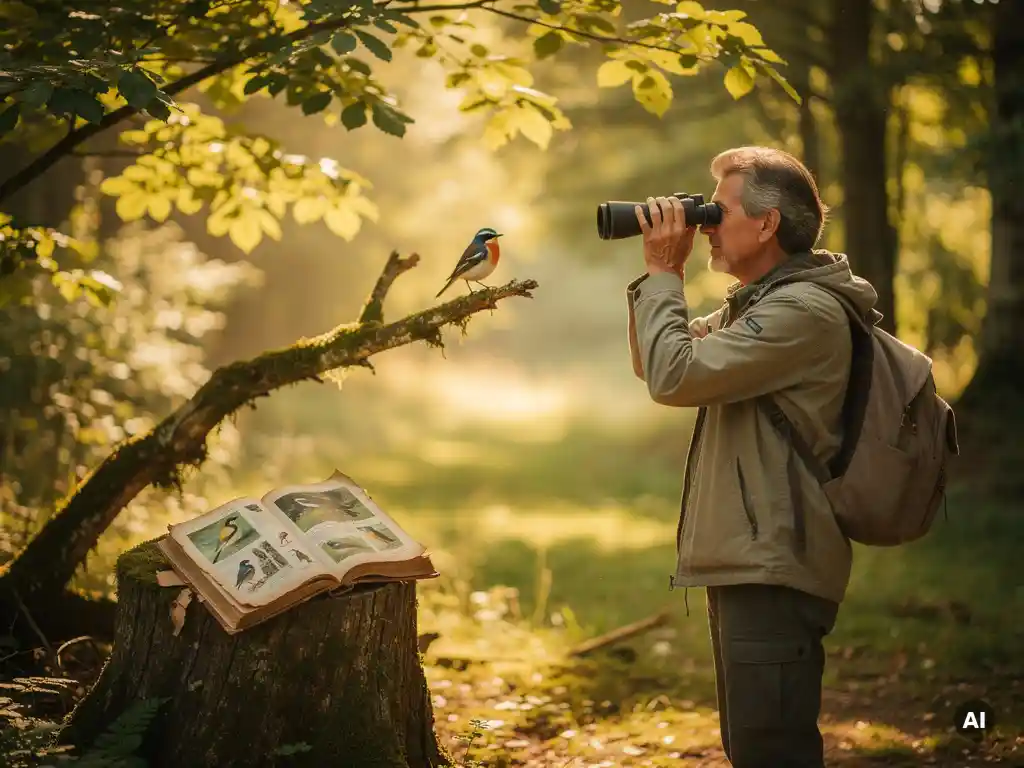
Birdwatching genuinely improves mental health by reducing stress hormones, encouraging mindfulness, and creating a sense of calm that lingers well beyond the activity itself. Research into nature-based wellbeing consistently shows that time spent observing birds is linked to lower anxiety, improved mood, and greater feelings of contentment. Below, we answer the most common questions about exactly how and why birdwatching delivers these benefits.
What happens to your brain when you watch birds?
When you watch birds, your brain shifts into a state of relaxed attention sometimes called “soft fascination”, a gentle, effortless focus that allows your mind to rest while still staying engaged. This is different from the sharp, draining concentration required by work or screens. The result is a measurable reduction in mental fatigue and a calmer, more restored mental state.
The sounds birds make play a significant role in this process. Natural soundscapes, particularly birdsong, signal to the brain that the environment is safe. This triggers a shift away from the stress response and toward a more settled, parasympathetic state. In practical terms, your heart rate slows, your breathing deepens, and the mental chatter that drives anxiety begins to quiet.
Birdwatching also activates a light form of curiosity and anticipation. Spotting an unfamiliar species or waiting for a bird to reappear keeps the mind gently occupied without overwhelming it. This combination of calm engagement and low-stakes curiosity is remarkably effective at breaking cycles of rumination and overthinking.
How does birdwatching reduce stress and anxiety?
Birdwatching reduces stress and anxiety by pulling your attention into the present moment, away from the worries and mental loops that fuel both. The act of looking and listening carefully for birds is a natural form of mindfulness that requires no training and no special technique. It works because it gives your nervous system a genuine reason to pause.
Spending time outdoors in natural settings also reduces cortisol, the body’s primary stress hormone. When birdwatching takes you outside, whether into a garden, a park, or open countryside, you benefit from exposure to natural light, fresh air, and greenery alongside the birds themselves. These elements compound the stress-relief effect.
Birdwatching mindfulness is particularly powerful because it is unforced. Unlike meditation, which some people find difficult to sustain, watching birds gives the mind a specific, absorbing focal point. You are not trying to clear your thoughts. You are simply looking and noticing, and that act alone creates the mental space that anxiety tends to crowd out.
Can birdwatching help with depression?
Yes, birdwatching can support people experiencing depression, though it works best as part of a broader approach to wellbeing rather than as a standalone treatment. The nature and mental health connection is well established, and birdwatching taps into several of the mechanisms that make time outdoors beneficial for low mood, including increased exposure to daylight, gentle physical movement, and a sense of purpose and engagement.
One of the particular strengths of birdwatching for depression is the way it provides structure and motivation to go outside. Depression often makes it hard to find reasons to leave the house, but having a specific, enjoyable goal changes the calculation. The anticipation of seeing a particular bird, or simply the habit of a morning walk with attention paid to what is flying and singing, can provide a reliable anchor in the day.
Birdwatching also connects people to a wider community. Joining a local birdwatching group or sharing sightings online adds a social dimension that reduces isolation, one of the key factors that deepens depression. The combination of nature, gentle activity, and community makes birdwatching a genuinely meaningful tool for supporting mental wellbeing.
What’s the difference between birdwatching and other nature activities for mental health?
The key difference between birdwatching and other nature activities is its combination of active attention and passive stillness. Activities like hiking or gardening involve physical effort, while meditation involves deliberate mental effort. Birdwatching sits in a unique middle ground: you are still, quiet, and receptive, but your mind is gently occupied rather than empty. This makes it accessible to people who find both exercise and meditation difficult to sustain.
Birdwatching also offers something that many nature activities do not: unpredictability and reward. Every session is different. You never know exactly what you will see, which keeps the experience fresh and engaging over time. This element of discovery creates a mild but genuine sense of excitement that other, more routine nature activities can lack.
Another distinction is portability. You do not need a trail, a garden, or special equipment to benefit from birdwatching. A window, a balcony, or a short walk to a local park is enough. This low barrier makes it one of the most consistently accessible nature-based mental health practices available, regardless of where you live or how much time you have.
How often do you need to birdwatch to feel the mental health benefits?
Even brief, regular birdwatching sessions can produce noticeable mental health benefits. Industry experience in nature-based wellbeing suggests that spending as little as 20 to 30 minutes in nature several times a week is enough to produce meaningful reductions in stress and improvements in mood. Birdwatching fits naturally into this kind of routine because it requires no special preparation and can be done almost anywhere.
Consistency matters more than duration. A short daily habit of paying attention to birds during a morning coffee or a lunchtime walk is likely to deliver more sustained birdwatching benefits than occasional longer outings. The regular act of noticing and attending to the natural world builds a mental habit of calm observation that carries over into the rest of your day.
That said, more immersive birdwatching experiences, such as a half-day visit to a nature reserve or a dedicated birdwatching trip, provide a deeper reset. Many birdwatchers describe these longer sessions as genuinely restorative in a way that shorter outings are not. A combination of frequent short sessions and occasional longer ones is likely the most effective approach for ongoing mental wellbeing.
Where is the best place to start birdwatching for mental wellbeing?
The best place to start birdwatching for mental wellbeing is wherever birds already are in your daily life. Your garden, a nearby park, a canal path, or even a window overlooking trees or rooftops is enough to begin. Starting close to home removes the barrier of travel and makes the habit easy to maintain, which is far more important than finding a spectacular location.
As you become more comfortable, local nature reserves, wetlands, and woodland areas offer richer birdwatching experiences and a greater variety of species. Many countries have well-maintained nature reserves with easy walking paths and hides that make birdwatching comfortable for beginners. These environments also tend to feel calmer and more immersive, which amplifies the mental health benefits.
A few simple steps make starting out easier:
- Start at home by placing a bird feeder near a window and spending a few minutes each morning watching who visits
- Download a bird identification app to help you name what you see, which adds the rewarding element of discovery
- Go at the right time, early morning is when birds are most active and birdsong is at its richest
- Leave your phone on silent and give yourself permission to simply look and listen without distraction
- Join a local group if you want company and guidance, birdwatching communities are typically welcoming to beginners
The goal is not expertise. The goal is presence. Even identifying a single new bird and pausing to watch it for a few minutes is enough to give your mind the rest it needs.
How PastBook helps you hold on to your birdwatching memories
Birdwatching naturally produces beautiful photos: rare sightings, stunning landscapes, quiet moments in nature that deserve more than sitting unseen in a camera roll. We at PastBook make it effortless to turn those photos into something lasting. Here is what we offer:
- AI-powered photo selection that automatically picks your best shots and removes duplicates
- Instant layout that organises your birdwatching photos into a beautifully designed photo book in under 60 seconds
- Date and location filtering so you can build a book from a specific trip or season of birdwatching
- Worldwide printing and delivery so your finished book arrives at your door, ready to keep or gift
Whether you want to document a year of local sightings or capture the highlights of a birdwatching trip, the PastBook app turns your photos into a printed keepsake with almost no effort. Open the app, let our AI do the work, and hold your memories in your hands.