



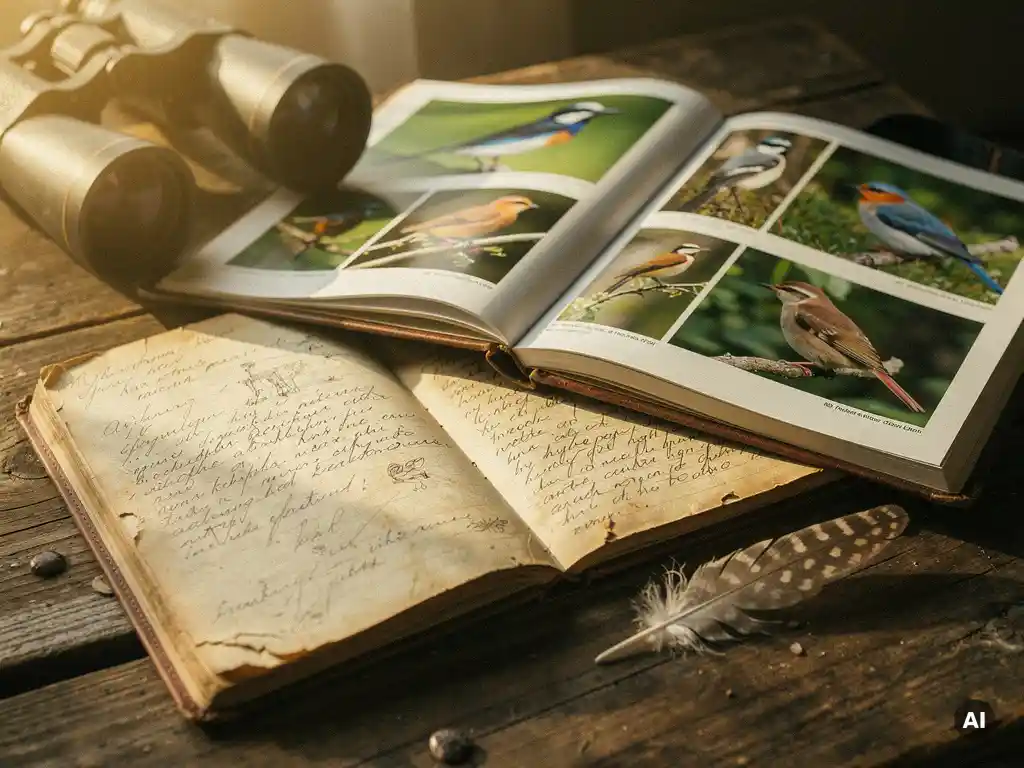
Yes, a birdwatching photo book can absolutely double as a species record, and for many birders, it works better than a plain written log. When each photo is paired with captions that include the species name, date, location, and behavior, the album becomes a visual species archive you can flip through, share, and revisit for years. The questions below unpack exactly how to build a bird photography album that serves both as a beautiful keepsake and a meaningful birdwatching log.
What information can a birdwatching photo book actually record?
A birdwatching photo book can record species identification, date and time of sighting, location, habitat, behavior, plumage details, and seasonal context. When captions are written thoughtfully, each page captures everything a traditional bird sighting record would, plus a visual reference that no written note can replicate.
The photograph itself carries information that words often struggle to convey: the exact coloring of a juvenile plumage, the posture of a bird mid-flight, or the habitat it was spotted in. Pair that image with a short caption noting the species, the GPS location or place name, the date, and any noteworthy behavior, and you have a record that is both scientifically useful and personally meaningful.
A well-captioned wildlife photo book can also capture context that enriches the sighting: weather conditions, time of day, whether the bird was alone or in a flock, and whether it was a rare or unexpected find for the region. Over time, this kind of detail makes your bird photography album a genuinely rich document of your birding history.
How does a photo book compare to a traditional birding field journal?
A photo book and a traditional birding field journal serve overlapping purposes, but each has distinct strengths. A field journal captures real-time notes, sketches, and observations in the moment. A birdwatching photo book provides visual confirmation of each sighting, making it easier to verify identification and share records with others.
Field journals excel at capturing immediate sensory detail: the call of a bird, the light conditions, or a quick behavioral note scribbled in the field. But they rely entirely on the accuracy and descriptive skill of the writer. A photo book, by contrast, offers objective visual evidence. For species identification especially, a photograph removes ambiguity in a way a written description rarely can.
The two formats are genuinely complementary. Many serious birdwatchers keep field notes in the moment and then compile a printed bird photography album at the end of a season or trip, using the photos to anchor the record and the notes to add narrative depth. The photo book becomes the polished, permanent version of what started as rough field observations.
Can photo captions replace written species notes?
Photo captions can replace basic written species notes for most birdwatching purposes. A caption that includes the species name, common name, date, location, and one or two behavioral observations covers the core information of a standard bird sighting record. For casual and intermediate birders, this is more than sufficient.
For those contributing to formal citizen science databases or rare bird committees, captions alone may not satisfy the level of written detail required. Those records typically need a full description of field marks, the observer’s experience level, and supporting evidence. But for a personal birdwatching log or lifelist companion, a strong caption does the job well.
The key is consistency. Decide on a caption format before you start, for example: species name, location, date, and one behavioral note, and apply it to every entry. A uniform structure makes the album far more useful as a reference tool and turns your wildlife photo book into something you can search through quickly when you want to check a past sighting.
What makes a birdwatching photo book useful for a lifelist?
A birdwatching photo book supports a lifelist by providing photographic evidence of each species alongside the date and location of the sighting. This visual confirmation is more reliable than memory alone and makes the lifelist a credible, reviewable record rather than just a personal tally.
A lifelist is only as strong as the evidence behind it. When you can point to a printed page showing the bird, the habitat, and the caption with the date and place, each entry on your list becomes verifiable. This matters especially for species that are easy to confuse with similar birds, where a photograph is the clearest way to confirm the identification.
Beyond verification, a photo book lifelist is simply more enjoyable to use. Flipping through pages of birds you have personally spotted, organized by species, region, or chronology, is a far richer experience than scrolling a spreadsheet. It also makes your lifelist something you can share with other birders or family members who want to understand what you have seen and where.
How do you organize a bird species photo book by region or season?
To organize a bird species photo book by region, group your sightings by country, habitat type, or specific birding location, with each section introduced by a short location note. To organize by season, divide the album into spring, summer, autumn, and winter sections, which naturally reflects migration patterns and species availability.
Organizing by region
Regional organization works well for birders who travel widely or who want to document the distinct birdlife of different habitats. You might dedicate a section to coastal species, another to woodland birds, and another to wetland sightings. Within each region, arrange the photos chronologically so the section also functions as a trip record.
Organizing by season
Seasonal organization suits birders who primarily watch in one area but want to track how species presence changes across the year. It also highlights migration events clearly: a spring section might show warblers and waders arriving, while an autumn section captures the same species departing. This structure makes your birdwatching log feel like a living document tied to the rhythm of the natural year.
Both approaches can be combined. A regional structure at the top level with seasonal subsections within each region gives you the flexibility to capture both geography and timing without losing clarity.
Should a birdwatcher make one big album or separate books per trip?
Whether to make one large birdwatching photo book or separate books per trip depends on how you bird and how you want to use the record. Separate books per trip work best for dedicated birding travel, where each destination deserves its own focused record. One ongoing album suits birders who watch regularly in familiar locations and want a cumulative annual record.
A single annual bird photography album has the advantage of capturing the full sweep of your birding year in one place. It is easy to compare sightings across seasons and habitats, and it makes a strong year-in-review keepsake. The drawback is that a very active birding year can produce a very long book, which can become unwieldy to navigate.
Separate trip books work well when a birding trip has a clear identity: a week in a specific national park, a coastal migration watch, or an international birding holiday. Each book becomes a self-contained record of that experience, with its own regional context and story. Many birders find that shorter, focused albums are easier to caption carefully and more satisfying to revisit.
A practical middle ground is to keep a single digital archive organized by trip, then decide at the end of each year which trips or sightings deserve their own printed album and which can be combined into an annual highlights book.
How PastBook helps birdwatchers create a lasting species record
Turning your bird sighting photos into a printed album should be as effortless as the birding itself. Here is how we make that happen:
- AI-powered photo selection: Our platform automatically selects your best shots, removes duplicates and low-quality images, and arranges them into a beautifully designed layout, no manual sorting required.
- Flexible formats: Choose from A4 or A5 sizes, soft cover or hardcover, with between 6 and 500 pages, so whether you are documenting a single trip or an entire year of birdwatching, the format fits the record.
- Caption support: Add species names, dates, and locations directly to your photos to turn your bird photography album into a genuine birdwatching log.
- FSC-certified premium paper: Every book is printed on high-quality, sustainably sourced paper and shipped worldwide through our global printing network.
- Ready in under 60 seconds: Import photos from your phone, Google Drive, or Dropbox, and your book is ready to review and order in under a minute.
Ready to turn your bird sightings into a printed record you will actually want to keep? Create your birdwatching photo book with PastBook today and preserve every species you have ever spotted in one beautiful, lasting album.
Related Articles
- What is the difference between offset and digital yearbook printing?
- Memorialising the Facebook profile of someone who has passed away
- What is the difference between a travel journal and a travel blog?
- How do you give a sentimental gift on a tight budget?
- What is a meaningful gift for a couple's anniversary?