











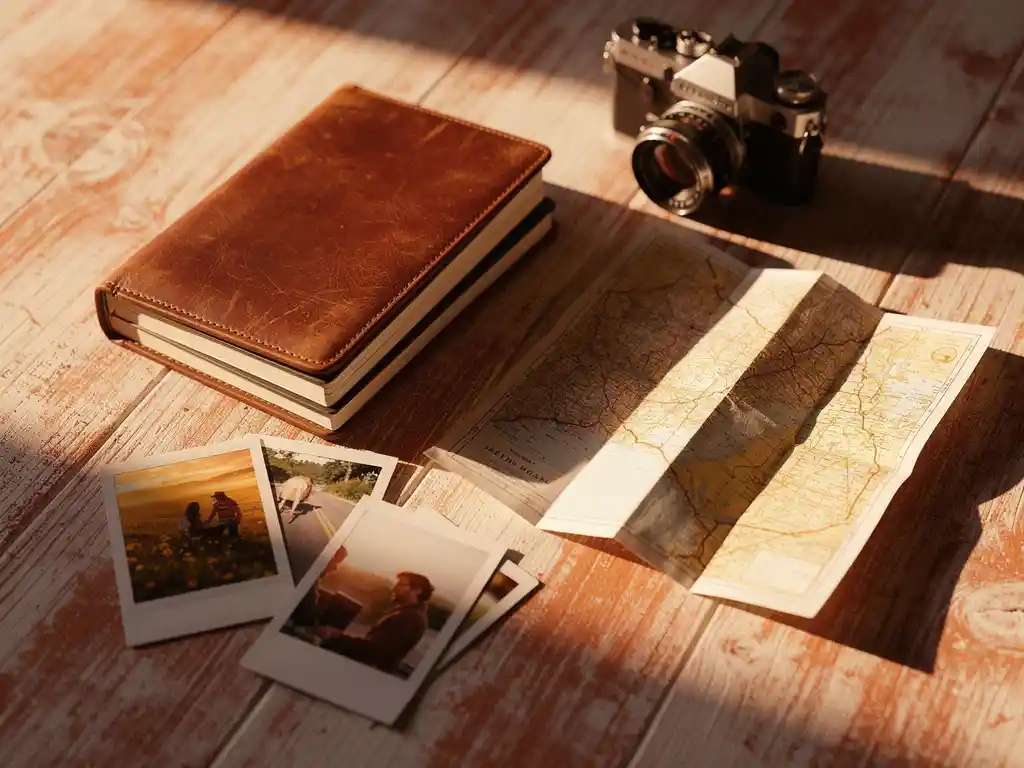
The best way to preserve travel memories that last a lifetime is to combine physical keepsakes with intentional organization shortly after returning home. A printed travel photo book is one of the most durable and emotionally resonant formats available, turning scattered images into a cohesive story you can hold, share, and revisit for decades. Below, we answer the most common questions travelers ask about keeping their memories alive long after the journey ends.
What are the best ways to preserve travel memories?
The most effective ways to preserve travel memories are those that combine physical permanence with personal meaning. Digital photos fade into camera rolls and get buried under thousands of newer images, while tangible keepsakes remain accessible and emotionally vivid. A printed photo book, a travel journal, a curated wall print, or a destination-specific calendar all serve as lasting anchors for the experiences you want to remember most.
Each format has its strengths. A travel journal captures the texture of a moment, the sounds, the feelings, and the small details a camera misses. A printed photo book organizes the visual story of your trip in a way that is easy to share with others. Wall prints or photo tiles keep a single powerful image visible in your daily life. The most complete approach combines at least two formats: one for the visual story and one for the written or emotional record.
- Printed photo books: Ideal for telling the full story of a trip in chronological or thematic order
- Travel journals: Capture sensory details, feelings, and anecdotes that photos cannot convey
- Photo tiles and wall prints: Keep your favorite travel moments visible in your everyday environment
- Calendars: Revisit travel memories month by month throughout the year
- Collaborative albums: Gather photos from everyone who traveled with you into one shared collection
How soon after a trip should you organize your travel photos?
You should organize your travel photos within the first week of returning home. The longer you wait, the harder it becomes to remember which photos belong to which day, location, or experience. More importantly, the emotional connection to those moments is strongest immediately after the trip, which makes the curation process feel meaningful rather than like a chore.
Most seasoned travelers find that waiting more than two weeks creates a backlog that feels overwhelming enough to ignore entirely. Thousands of images pile up, the holiday feeling fades, and the project gets postponed indefinitely. Acting quickly, even if imperfectly, produces far better results than waiting for the ideal moment to start.
If a full organization session feels too ambitious in the first few days back, a simple first step is to identify your top twenty to thirty favorite images from the trip. This small action creates momentum and makes it much easier to build a photo book or album later without having to revisit every single image from scratch.
What makes a travel photo book better than a digital album?
A printed travel photo book is better than a digital album because it is permanent, tangible, and requires no device, platform, or internet connection to access. Digital albums depend on platforms that change, accounts that expire, and devices that break. A physical book sits on a shelf and remains accessible to anyone who picks it up, including people who are not digitally connected.
There is also a significant psychological difference between scrolling through a phone and turning the pages of a book. Research into memory and cognition consistently shows that physical interaction with objects creates stronger, more durable emotional associations. A photo book invites slower, more deliberate engagement, which deepens the sense of nostalgia and connection to the memories it holds.
For gifting, the advantage is even clearer. A printed travel photo book communicates effort, thoughtfulness, and care in a way that sharing a digital folder simply cannot. Whether you are giving it to a travel companion, a parent, or a friend who could not join the trip, a physical book carries emotional weight that a screen link does not.
How do you turn hundreds of travel photos into one cohesive album?
To turn hundreds of travel photos into one cohesive album, start by organizing images chronologically or by destination, then select a representative set of thirty to sixty photos that tell the story of the trip from beginning to end. Remove duplicates, blurry shots, and near-identical images first, then look for variety: landscapes, portraits, food, details, and candid moments that together create a complete narrative.
Curate before you create
The most common mistake is trying to include too many photos. A cohesive album tells a story with rhythm and pacing. Too many similar images of the same landmark or the same group pose dilutes the impact of each individual photo. Aim for quality over quantity, and look for images that complement each other rather than repeat.
Group by moment, not just by date
Organizing photos strictly by timestamp can produce an album that feels like a log rather than a story. Grouping images by experience, such as the morning hike, the market visit, or the sunset dinner, creates natural chapters that give the album structure and emotional flow. This approach also makes it easier to write captions or notes that add context to each section.
Which travel memories are worth preserving in print?
The travel memories most worth preserving in print are the ones that capture genuine emotion, significant milestones, or experiences that are unlikely to repeat. First trips to a long-dreamed destination, family holidays where children are at a particular age, solo adventures that marked a turning point, and group trips with people you love all qualify. The criterion is not photographic perfection but personal significance.
Candid moments are often more worth preserving than posed ones. The photo of a child laughing at the beach, a partner lost in thought at a café window, or a group of friends sharing a meal tells a more honest and lasting story than a perfectly staged shot in front of a landmark. When selecting images for print, prioritize the photos that make you feel something over the ones that simply document where you were.
It is also worth preserving the small, ordinary details of a trip: the texture of a local market, the view from your hotel window, the handwritten menu at a restaurant. These are the images that tend to carry the most nostalgic power years later, because they capture the atmosphere of a place rather than just its famous sights.
How do you make travel memories last for future generations?
To make travel memories last for future generations, create physical records that include context, not just images. A printed photo book with captions, dates, and locations gives future family members the information they need to understand what they are looking at and why it mattered. A photo without a caption is a beautiful image; a photo with a story attached is a piece of family history.
Print quality matters enormously for longevity. Images printed on premium, archival-quality paper in a hardcover format can remain vibrant and intact for many decades. Digital files, by contrast, risk becoming inaccessible as file formats evolve and storage devices fail. A physical book requires no technology to view and can be passed from one generation to the next without any loss of quality.
Including multiple perspectives also enriches the record. Collaborative albums that gather photos from everyone on a trip, with each person capturing different moments and details, create a richer, more complete picture of the experience than any single photographer’s selection could. These multi-perspective albums are particularly valuable as family documents because they show the trip as it was experienced by different people at different moments.
How PastBook helps you preserve your travel memories
We built PastBook specifically to remove the friction that stops most travelers from ever turning their photos into something permanent. Our AI-powered platform does the hard work for you: it analyzes image quality, removes duplicates, selects the best shots, and arranges them into a beautifully designed travel photo book in under 60 seconds. You simply choose a date range, location, or album, and we handle everything else.
- Automatic curation: Our AI selects the best images and removes blurry or duplicate photos so you do not have to
- Multiple import sources: Pull photos from Instagram, Facebook, Google Drive, Dropbox, or directly from your phone
- Flexible formats: Choose from soft cover, hardcover, or premium hardcover in A4 or A5, with between 6 and 500 pages
- Premium print quality: All books are printed on FSC-certified paper and shipped worldwide through our global printing network
- Collaborative albums: Invite travel companions to contribute their photos so the whole trip is captured in one place
Whether you want to create a photo book from your last holiday or finally do something with years of accumulated travel photos, we make the process effortless. Start your travel photo book today and turn your favorite adventures into something you can hold, share, and pass down for generations.