



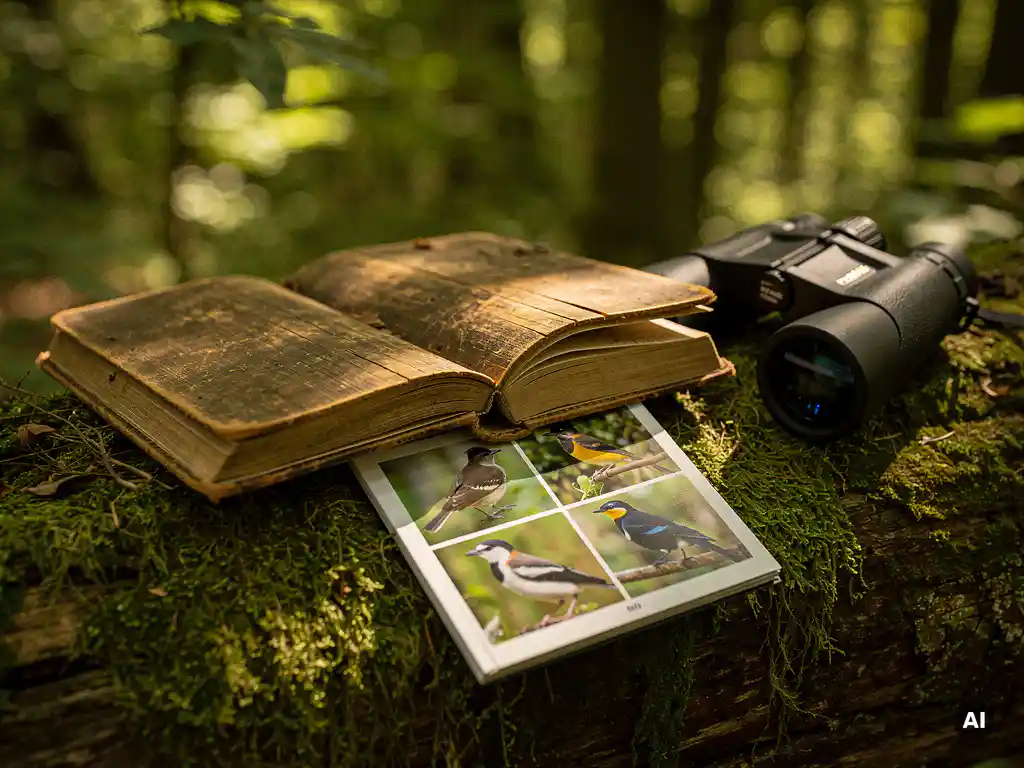
You can start birdwatching on a budget for well under $50, and in many cases, for free. The hobby requires far less gear than most beginners assume, and the natural world is generous with free access points, free apps, and free communities ready to share their knowledge. Whether you are a complete newcomer or just looking to keep costs down, birdwatching is one of the most accessible outdoor hobbies available in 2026. Here is everything you need to know to get started without stretching your wallet.
What equipment do you actually need to start birdwatching?
To start birdwatching, you need just three things: a pair of binoculars, a way to identify birds, and somewhere to go. Everything else, specialist clothing, tripods, spotting scopes, and premium field guides, is optional, and most of it can wait until you know whether the hobby is right for you. Many experienced birders started with nothing more than a basic pair of binoculars and a free app on their phone.
The essentials for a beginner are minimal:
- Binoculars — the single most important piece of kit, but not necessarily expensive ones
- A bird identification resource — a free app works just as well as a printed field guide for beginners
- Comfortable, quiet clothing — muted colors like gray, navy, or brown help you blend in; you almost certainly own something suitable already
- Sturdy footwear — any walking shoes or boots will do for most local sites
That is the full starter kit. A notebook is a nice addition for logging sightings, but your phone’s notes app works just as well. Do not let gear lists on specialist websites convince you that birdwatching requires a significant upfront investment: it does not.
How much do beginner binoculars cost, and are cheap ones worth it?
Beginner binoculars suitable for birdwatching cost between $20 and $80, and yes, cheaper models are absolutely worth it when you are starting out. A pair in the $30 to $50 range from a reputable brand will show you more than enough detail to identify common garden and park birds. Spending more only becomes worthwhile once you know you enjoy the hobby and want to pursue it seriously.
When choosing binoculars on a budget, look for these specifications:
- 8×42 or 10×42 magnification — the most versatile for general birdwatching in varied light conditions
- Wide field of view — helps you locate moving birds quickly, which matters more than raw magnification
- Rubber armor — protects against knocks and makes them easier to grip in cold or wet weather
- A central focus wheel — easier and faster to adjust than individual eyepiece focus
Brands like Celestron, Bushnell, and Nikon all offer entry-level models in this price bracket that perform well in daylight conditions. Avoid very cheap no-name binoculars under $15: the optics are often poor enough to make the experience frustrating rather than enjoyable. If budget is tight, check second-hand marketplaces like eBay or Facebook Marketplace, where good-quality used binoculars regularly appear at a fraction of their original price.
What free apps and resources can replace expensive field guides?
Several excellent free apps can fully replace printed field guides for beginner birdwatchers. Merlin Bird ID, developed by the Cornell Lab of Ornithology, is widely considered the best free option — it uses AI to identify birds from a photo or by answering a few quick questions about what you saw. eBird, also from Cornell, lets you log sightings and explore what other birders are seeing near you.
Here are the most useful free resources available in 2026:
- Merlin Bird ID — photo identification, sound identification, and curated bird packs for your region, all free
- eBird — a global database of bird sightings; invaluable for finding out which species are active near you right now
- Audubon Society website — free species profiles, range maps, and habitat information for North American birds
- RSPB website (UK) — free identification guides, habitat advice, and a species finder covering British birds
- YouTube — an underrated resource; channels dedicated to bird song, identification tips, and beginner guides are plentiful and free
Printed field guides are excellent references and worth owning eventually, but they are not necessary on day one. The combination of Merlin and eBird alone will carry most beginners through their first year without spending a penny on identification resources.
Where are the best free places to go birdwatching?
The best free birdwatching locations are local parks, nature reserves with free public access, lakesides, woodland trails, and even your own garden or a nearby street with mature trees. You do not need to travel to famous wildlife destinations to see a wide variety of birds — most areas have rich local birdlife that beginners will find rewarding. Starting close to home also helps you learn a core set of species before branching out.
Good free locations to explore include:
- Local parks and green spaces — reliably host sparrows, finches, thrushes, pigeons, corvids, and often waterfowl if there is a pond
- Nature reserves with free entry — many national wildlife refuges and nature trusts offer free public access; use eBird to find highly rated spots near you
- Coastlines and estuaries — free to visit and often spectacular for wading birds, gulls, and seabirds, especially during migration season
- Woodland trails and country paths — excellent for woodland species like woodpeckers, nuthatches, and warblers
- Your own garden or balcony — setting up a simple bird feeder transforms any outdoor space into a birdwatching spot
The eBird app’s “Explore” feature is one of the best tools for finding free hotspots nearby — it maps thousands of sites and shows recent sightings, so you can target locations where interesting species have been seen recently.
How do you learn bird identification without paying for a course?
You can learn bird identification entirely for free using a combination of apps, online communities, YouTube, and practice in the field. No paid course is necessary for beginner- or even intermediate-level identification skills. The fastest way to improve is simply to go out regularly, look carefully, and use free tools like Merlin to check your guesses in real time.
Effective free learning strategies include:
- Use Merlin’s Sound ID feature — hold your phone up outdoors and let the app identify birds by their calls in real time; this trains your ear faster than any book
- Join local birdwatching groups — most areas have free or low-cost clubs that run guided walks where experienced birders share their knowledge willingly
- Engage with online communities — Reddit’s r/whatsthisbird, Facebook birding groups, and iNaturalist all have active communities happy to help with identification questions
- Focus on common species first — learning to identify your local everyday birds thoroughly builds the visual and behavioral vocabulary you need to spot less common species later
- Study behavior, not just appearance — how a bird moves, feeds, and perches is often as useful as plumage color for identification
Consistency matters more than resources. An hour spent outside with Merlin open and your binoculars raised will teach you more than a week of reading about birds at home.
How do you preserve your birdwatching memories without spending a lot?
You can preserve birdwatching memories affordably by keeping a simple field notebook, logging sightings on eBird, and taking photos on your smartphone. Over time, these records become a personal history of every species you have encountered, every location you have visited, and the moments that made the hobby special. The challenge most birders eventually face is that those memories stay scattered across notebooks, camera rolls, and apps rather than gathered into one place.
Practical ways to capture and keep birdwatching memories include:
- A field notebook — a basic notebook costs very little, and a handwritten log has a charm that digital records cannot replicate
- eBird life list — your eBird account automatically builds a cumulative life list of every species you have logged, free forever
- Smartphone photography — modern phone cameras are capable enough to capture usable bird photos, especially for common species at reasonable distances
- A photo book of your best shots — turning a year’s worth of birdwatching photos into a printed hardcover book is a meaningful way to mark your progress
That last idea is one that many birders overlook. After months of early mornings and patient watching, you have a camera roll full of photos that deserve more than being buried in a digital folder.
How PastBook helps you preserve your birdwatching memories
Those early mornings and quiet moments with a rare sighting deserve a place you can hold in your hands. We built PastBook to turn the photos on your phone into a finished photo book in minutes, with no design skills needed. Here is how it works:
- You choose the photos — pick your own shots from your phone’s camera roll on iOS or Android, or let the app help you find them by trip, date range, location, or album
- Easy layout — once you have chosen your photos, the app lays them out into a book for you
- Edit before you order — swap or add photos, remove pages, change the cover, and add captions, such as the species name and where you spotted it
- Share the book — with the Contribution feature, friends and family can add their photos to the same book, which is ideal if you birdwatch with a group
- Printed locally and shipped to you — your hardcover book is printed by a local printing partner and delivered to your door
Our hardcover photo books start at $19.99 for the small size (8.5″ × 6″) and $34.99 for the large size (12″ × 8.5″), with the first 24 pages included. You can see full pricing and shipping details before you order.
Whether you want to mark your first year of birdwatching, celebrate a memorable trip to a nature reserve, or create a gift for a fellow birder, a photo book is a low-cost way to keep those memories close. Download the PastBook app and start your book today.