











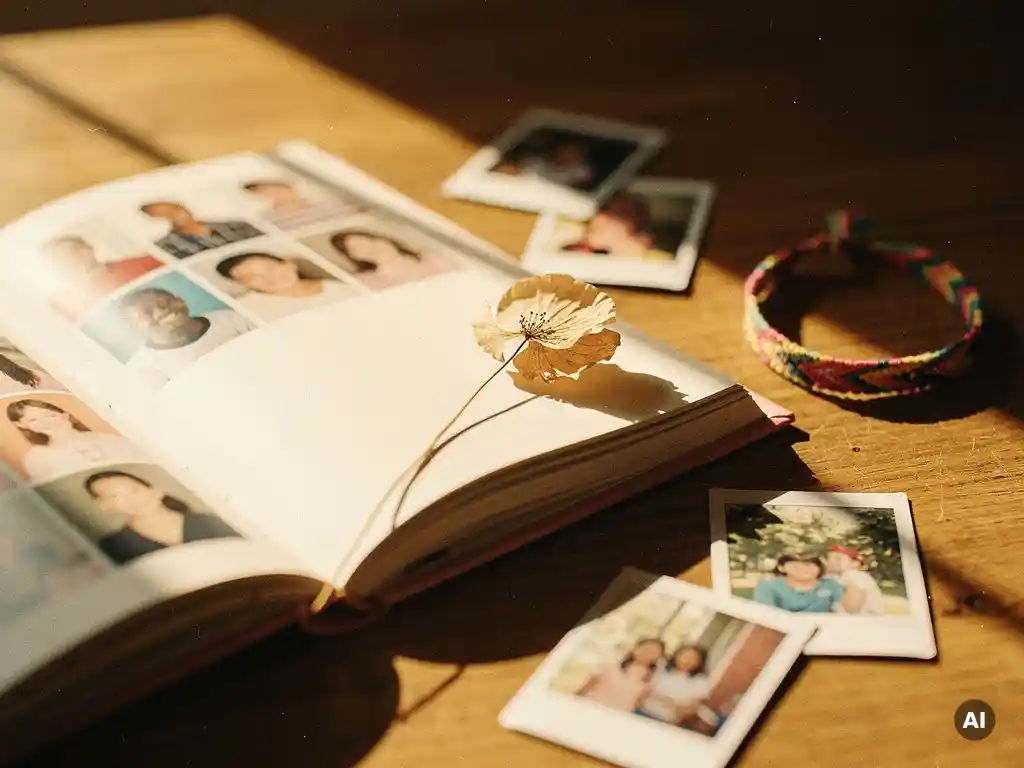
A yearbook captures a school year by combining photos, student portraits, candid moments, club activities, sports highlights, and personal messages into a single printed keepsake. It serves as an official record of a specific academic year, preserving the faces, events, and milestones that defined that time for everyone who lived it. Below, we unpack exactly what goes inside, who makes it happen, and how families can create their own version at home.
What goes inside a school yearbook?
A school yearbook typically contains individual student portraits, class group photos, candid shots from school events, sports coverage, club and extracurricular features, staff pages, and a section for personal messages and signatures. Together, these elements create a comprehensive visual record of the academic year from September through to the final school bell.
Most yearbooks follow a recognizable structure. Individual portraits anchor the book, giving every student a named, permanent place in the record. Around those portraits, editors weave in coverage of the moments that made the year memorable:
- Sports seasons – action shots, team photos, and standout game moments
- School events – dances, performances, graduation ceremonies, and field trips
- Clubs and activities – drama productions, science fairs, student council meetings
- Candid photography – hallway moments, lunch breaks, and friendship snapshots
- Quotes and dedications – senior quotes, teacher tributes, and personal notes
- Signature pages – blank or lightly designed spaces for handwritten messages from classmates
The balance of these elements varies by school, but the goal is always the same: to make sure every student sees their year reflected back at them on the page.
How does a yearbook preserve school memories long-term?
A yearbook preserves school-year memories by creating a physical, printed artifact that does not disappear when a social media account is deleted, a phone is lost, or a digital platform shuts down. Print is permanent in a way that digital files simply are not, and that permanence is precisely what gives yearbooks their lasting emotional power.
Decades after graduation, a yearbook can surface names, faces, and feelings that would otherwise be completely inaccessible. It captures not just what people looked like, but the specific cultural context of that year: the fashion, the slang in the captions, the clubs that mattered, the teachers everyone remembered. These details make a yearbook far more than a photo collection. It becomes a time capsule.
There is also a social dimension to preservation. Because every student in the class receives the same book, the memory is shared and validated collectively. When you open your yearbook years later, you know that your former classmates are holding the same record of the same moments. That shared ownership makes the nostalgia feel grounded and real rather than personal and uncertain.
Who contributes to making a school yearbook?
A school yearbook is typically produced by a dedicated yearbook committee or journalism class, working under the guidance of a teacher or faculty advisor. Students take on roles as photographers, writers, designers, and editors, while the broader student body contributes through portrait sittings, event participation, and submitted personal photos.
In practice, the production involves several overlapping groups:
- Student editors – oversee the overall design, layout, and content decisions
- Student photographers – attend events throughout the year to capture candid and editorial shots
- Writers and caption editors – craft the text that gives context to each photo
- Faculty advisors – provide editorial guidance, approve content, and manage timelines
- Professional printing companies – handle the final production, printing, and delivery of the finished books
- The wider student body – contributes senior quotes, personal submissions, and poses for portraits
Producing a yearbook is genuinely collaborative work, and for the students involved, it is often one of the most memorable extracurricular experiences of their school career.
What makes a yearbook different from a regular photo album?
A yearbook is different from a regular photo album because it is a curated, editorially structured publication designed to represent an entire community, not just one person’s perspective. A personal photo album reflects individual experience; a yearbook reflects collective experience, with named portraits, institutional coverage, and a designed layout intended for a wide audience.
A few specific distinctions stand out:
- Named identification – yearbook photos are captioned with full names, class years, and often activities, creating a searchable record rather than a private collection
- Editorial curation – content is selected to represent the whole school community, not just the photographer’s social circle
- Institutional permanence – schools often archive yearbooks in libraries, making them historical documents as well as personal keepsakes
- Shared ownership – every student receives the same book, making the memory communal
A personal photo album is a wonderful thing, but it tells one story. A yearbook tells many stories at once, woven together into a single volume that belongs to everyone who was there.
How has the school yearbook changed in the digital age?
In the digital age, school yearbooks have expanded beyond purely printed books to include digital editions, online galleries, and QR codes that link to video content. However, the printed yearbook has not been replaced. If anything, its value as a tangible, lasting object has grown precisely because so much of modern life exists only on screens.
The production process has changed significantly. Yearbook committees now use professional design software, submit files digitally to printing companies, and can incorporate higher-quality photography than ever before thanks to smartphone cameras. Some schools offer augmented reality features, where scanning a yearbook photo with an app plays a video clip from the event.
At the same time, the challenge has grown. With hundreds of photos taken at every school event and shared across multiple platforms, curating the best yearbook photos requires more editorial judgment, not less. The abundance of imagery makes the human decision about what to include more important than ever.
How can families create their own version of a school yearbook?
Families can create their own version of a school yearbook by collecting the best photos from a child’s academic year and turning them into a printed school photo book. This personal yearbook can include everything the official school edition might miss: birthday celebrations, after-school activities, family moments tied to the school calendar, and the candid shots that capture a child’s personality rather than just their portrait.
A few practical yearbook ideas to get started:
- Gather photos by school year or grade, using a dedicated folder or album on your device
- Include a mix of school events, extracurricular moments, and everyday snapshots
- Add captions with names, dates, and short descriptions to give future context
- Consider a first-day-of-school and last-day-of-school photo as bookends for the year
- Include handwritten notes or quotes from your child about their favorite memory of the year
Done consistently year after year, these personal school photo books become an extraordinary archive of childhood. By the time a child reaches graduation, the family has a shelf of volumes that capture every stage of growing up in a way no official yearbook ever could.
How PastBook helps you capture the school year
We built PastBook specifically to make this kind of memory-keeping effortless. Here is what we offer for families who want to create their own school yearbook:
- Sélection de photos basée sur l'IA – our platform automatically picks the best shots from your chosen source, removes duplicates, and filters out low-quality images
- Prêt en moins de 60 secondes – from upload to print-ready layout, the whole process takes less than a minute
- Formats flexibles – choose soft cover, hardcover, or premium hardcover in A4 or A5, with anywhere from 6 to 500 pages
- Papier de qualité supérieure certifié FSC – printed to a quality that does justice to your most meaningful photos
- Expédition dans le monde entier – delivered via our global network of local printing facilities
Whether you want a single year’s highlights or a multi-year childhood archive, we make it simple to turn scattered digital photos into a beautiful, lasting school photo book. Start your yearbook today and give this school year the permanent home it deserves.
Articles connexes
- What should you do when wanderlust becomes overwhelming sadness?
- What are the best last-minute Thanksgiving gifts for family gatherings?
- How do you handle yearbook photo submissions from students?
- Quel est le meilleur cadeau pour quelqu'un qui part en lune de miel ?
- Quelle taille de livre photo devriez-vous choisir ?