











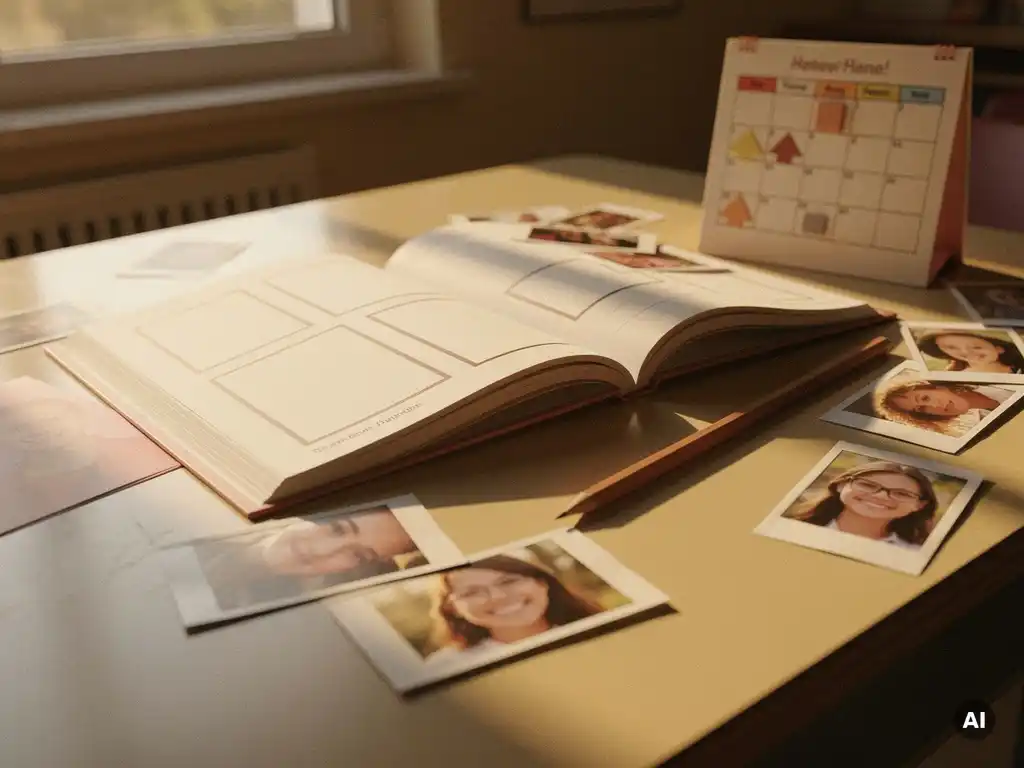
Schools should ideally start planning their yearbook at the very beginning of the academic year, or even before it starts. For most schools, that means kicking off yearbook planning in August or September for a book that will be delivered by May or June. The earlier the start, the more time the team has to gather photos, meet deadlines, and produce something students will genuinely treasure. This article walks through the key milestones, common pitfalls, and the people and tools that make yearbook production manageable.
How early should a school start planning its yearbook?
A school should start planning its yearbook at least eight to ten months before the intended delivery date. For a May or June delivery, that means beginning in September at the latest. Schools that start earlier, even in the summer before the academic year begins, give their yearbook committee the runway needed to build a strong photo collection, meet print deadlines, and avoid the panic that comes with a compressed timeline.
The yearbook is a record of an entire school year. That means the planning process has to run in parallel with the year itself. Waiting until spring to start collecting photos from autumn events means those moments are either lost or poorly documented. A September start allows the team to photograph the first day of school, autumn sports seasons, and early academic milestones, content that would otherwise be missed entirely.
Schools with no prior yearbook experience often underestimate how long the production process takes. Beyond photography, there is layout design, proofreading, approval processes, and print lead times to account for. Starting early is not about being overly cautious, it is about giving the project the time it genuinely needs.
What are the key milestones in a yearbook production timeline?
A well-structured yearbook timeline includes five major milestones: project kickoff, photo collection, content and layout completion, final review and approval, and submission to print. Each milestone builds on the last, and missing one typically delays all the others.
- August to September – Project kickoff: Form the yearbook committee, assign roles, set the overall theme, and establish a master schedule with internal deadlines for each section of the book.
- September to February – Ongoing photo collection: Actively photograph and collect images from school events, sports days, class activities, and everyday school life. This phase runs continuously throughout the year.
- January to March – Content and layout work: Begin organising photos into sections, writing captions, and designing page layouts. This is the most time-intensive phase and should not be left until the final weeks.
- March to April – Review and approval: Proofread all text, check photo quality, confirm names and captions are accurate, and get sign-off from school leadership before anything goes to print.
- April to May – Submission and print: Submit the final files to your printer and allow adequate lead time for production and delivery. Most printers require at least two to four weeks, so factor this into the yearbook deadline.
The exact dates will shift depending on your school’s calendar and when you want the books in students’ hands. The key is to map these milestones backwards from your delivery date and build in buffer time at every stage.
What happens if yearbook planning starts too late?
Starting yearbook planning too late almost always results in a weaker final product, a stressed committee, and missed deadlines. When planning begins in the second half of the school year, the team has already lost months of photographic content and has far less time to organise, design, and review the book before the print deadline.
Late starts create a cascade of problems. Photos from early in the year, the first day of school, autumn events, winter performances, are either missing or have to be sourced from wherever they happen to exist, often in inconsistent quality. The layout and design phase gets rushed, which shows in the finished product. Proofreading is skipped or done carelessly, which means errors make it into print. And because print lead times are fixed, a late submission often means a late delivery, sometimes after students have already left for the summer.
Beyond the practical issues, a rushed yearbook puts enormous pressure on the students and staff involved. What should be a rewarding creative project becomes a stressful scramble. Schools that have experienced this once almost always commit to an earlier start the following year.
Who should be involved in yearbook planning from the start?
A yearbook committee should include a teacher or staff advisor, a student editor or lead, a small team of student contributors, and ideally a point of contact with school leadership. Getting the right people involved from day one prevents bottlenecks and ensures the project has both creative energy and institutional support.
Le staff advisor provides continuity, keeps the project on schedule, and acts as the bridge between the student team and school administration. Without an engaged advisor, yearbook projects frequently stall when students lose momentum or face competing priorities.
Le student editor takes ownership of the creative direction, coordinates contributors, and is responsible for keeping sections on track. This role works best when it is given to someone organised and genuinely motivated, not just assigned by default.
Student contributors handle photography, writing, and layout work. The more events they can attend and document throughout the year, the richer the final book will be. Assigning specific contributors to specific events or sections early in the year prevents duplication and gaps.
It is also worth involving school leadership early, not in day-to-day decisions, but in approving the overall concept, signing off on sensitive content, and supporting the project when it needs resources or access. A yearbook that surprises the headteacher at the final approval stage is a yearbook that risks delays.
How does a photo book platform simplify school yearbook creation?
A photo book platform simplifies school yearbook creation by automating the most time-consuming parts of the process: photo selection, layout design, and print preparation. Instead of manually sorting through hundreds of images and building layouts from scratch, the team can upload their photos and let the platform handle the heavy lifting, dramatically reducing the time from idea to finished book.
Traditional yearbook production involves a steep learning curve with design software, significant back-and-forth with printers, and a process that can stretch across months. A modern photo book platform compresses that process considerably. Photos can be imported from multiple sources, duplicates and low-quality images are filtered out automatically, and layouts are generated instantly, leaving the team free to focus on personalisation rather than production logistics.
This is especially valuable for schools where the yearbook is run by students with no design experience, or where the staff advisor has limited time to dedicate to the project. The platform does not replace the committee’s creative input, it removes the technical barriers that slow the process down.
How PastBook helps with school yearbook planning
We built PastBook to make photo book creation genuinely effortless, and that applies just as much to school yearbooks as it does to personal albums. Here is what we offer that makes yearbook production simpler:
- AI-powered photo curation: Our platform automatically selects the best photos from your collection, removes duplicates, and filters out low-quality images, so the committee spends less time sorting and more time creating.
- Instant layouts: Photos are arranged into beautifully designed page layouts in under 60 seconds, with no design experience required.
- Formats flexibles : Choose from soft cover, hardcover, or premium hardcover in A4 or A5 sizes, with books ranging from 6 to 500 pages, enough room for a full school year.
- High-quality print: All books are printed on FSC-certified premium paper and shipped worldwide through our global network of local printing facilities.
- Sources d'importation multiples : Photos can be uploaded directly from devices or imported from Google Drive, Dropbox, and other sources, making it easy to gather contributions from across the school community.
Whether your yearbook committee is just getting started or working against a tight deadline, we make it easy to go from a folder of photos to a print-ready school yearbook. Start creating your school yearbook with PastBook today and see how quickly a year of memories can come together.