











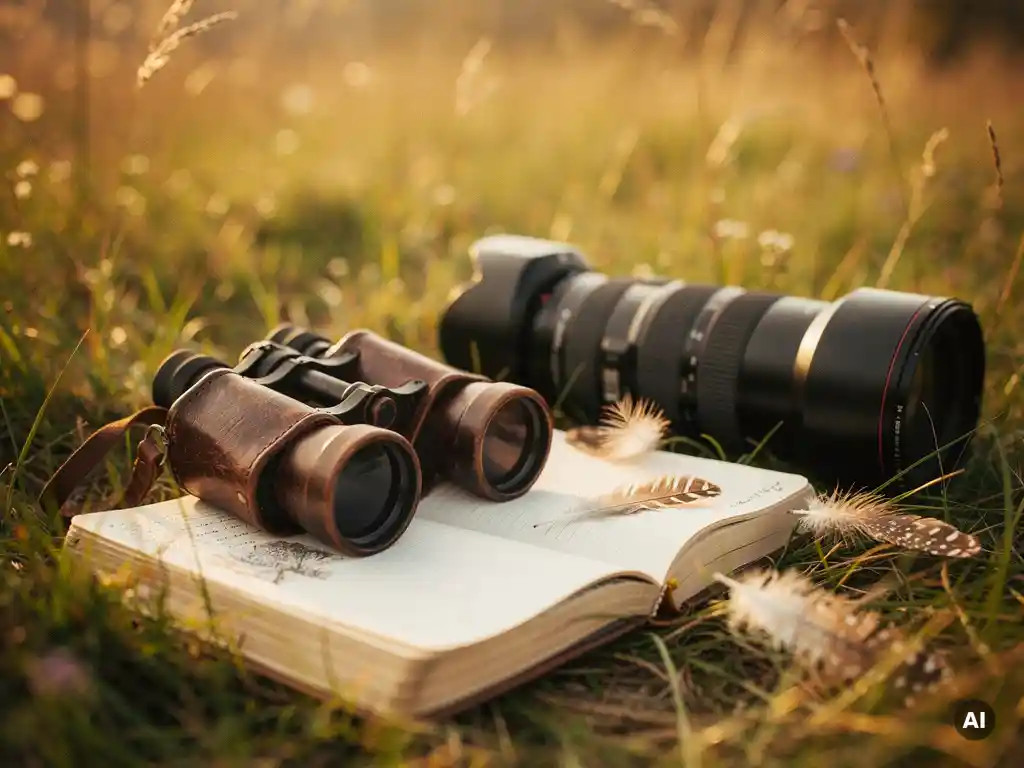
To start birdwatching as a beginner, you need surprisingly little equipment. A decent pair of binoculars is the one essential item, everything else is helpful but optional. Most beginners can get started for well under $100, and the hobby rewards patience and observation far more than expensive gear.
The core birdwatching essentials for beginners are binoculars, a field guide or identification app, and comfortable outdoor clothing. As your skills and interest grow, you can add tools like a spotting scope or a dedicated journal. This article walks through each piece of beginner birdwatching gear so you know exactly what to prioritize.
What binoculars do beginner birdwatchers actually need?
For birdwatching, beginners need binoculars with a magnification of 8x and an objective lens diameter of around 42mm, written as 8×42. This combination gives you a bright, stable image with a wide enough field of view to track moving birds through trees and across open ground. It is the most widely recommended starting specification among experienced birders.
When shopping for birdwatching binoculars as a beginner, the numbers on the label tell you most of what you need to know. The first number is magnification, higher is not always better. A 10x magnification sounds impressive, but it narrows your field of view and amplifies hand shake, making it harder to locate fast-moving birds. An 8×42 or 8×40 pair strikes the right balance for most birdwatching environments.
Budget matters, but you do not need to spend a fortune. Entry-level binoculars from reputable brands in the $80 to $150 range will serve a beginner well. Look for models that are waterproof, have fully multi-coated lenses for better light transmission, and feel comfortable to hold for extended periods. Avoid very cheap binoculars under $30, the image quality tends to be poor enough to make the hobby frustrating rather than enjoyable.
Do you need a field guide to start birdwatching?
A field guide is not strictly required to start birdwatching, but having one dramatically improves the experience. A good regional field guide helps you identify what you are seeing, learn the distinguishing features of local species, and build the observational vocabulary that makes birdwatching genuinely rewarding. Most beginners find that identification is what hooks them on the hobby.
When choosing a field guide, opt for one specific to your region rather than a global or continental guide. A book covering every bird in North America, for example, is overwhelming when you are trying to identify a small brown bird in your backyard. Regional guides focus on the species you are actually likely to encounter, with illustrations or photographs that highlight the key identifying features.
If you prefer not to carry a physical book, identification apps are a strong alternative and are covered in more detail below. Many beginners use both, a physical guide at home for deeper reading and an app in the field for quick lookups.
What clothing and footwear should birdwatchers wear?
Birdwatchers should wear muted, natural colours, greens, browns, greys, and tans, and choose quiet fabrics that do not rustle loudly when you move. Bright colours and noisy synthetic materials can startle birds before you get close enough to observe them. Layering is important because birdwatching often means standing still for extended periods in variable weather.
Footwear depends heavily on where you plan to watch birds. For woodland trails and wetland edges, waterproof walking boots with good ankle support are the practical choice. For garden birdwatching or short park visits, a sturdy pair of trainers or trail shoes is perfectly adequate. Avoid squeaky or stiff-soled shoes that make noise on dry leaves or gravel.
A wide-brimmed hat is worth adding to your kit, it reduces glare, which makes it easier to observe birds in bright conditions, and it keeps rain off your binoculars. In colder months, gloves that allow you to operate binoculars and a phone without removing them are a small but worthwhile investment.
How useful is a spotting scope for a beginner?
A spotting scope is not useful for most beginners and is not part of the essential birdwatching gear for someone just starting out. Spotting scopes are high-magnification monoculars mounted on a tripod, designed for observing distant birds across open water, mudflats, or large grasslands. They are a specialist tool that adds real value once you are regularly visiting those specific environments.
For woodland walks, garden birdwatching, and general nature reserves, binoculars do everything you need. A spotting scope is heavy, slow to set up, and unnecessary when birds are within the typical 20 to 100 metre range that binoculars handle comfortably. Most experienced birders recommend waiting until you have at least a year of regular birdwatching experience before investing in a scope, by then you will know whether your preferred habitats actually call for one.
What apps and tools help beginners identify birds?
The most useful apps for beginner birdwatchers are Merlin Bird ID by the Cornell Lab of Ornithology and eBird, also from Cornell. Merlin allows you to identify birds by answering a few simple questions or by uploading a photo, and its Sound ID feature can identify birds from their calls in real time. eBird lets you log your sightings and explore what other birders have seen nearby.
Merlin is available for free on iOS and Android and covers species worldwide through downloadable regional packs. It is widely considered the best starting point for beginner bird identification because it is accurate, fast, and genuinely easy to use in the field. The sound identification feature alone has transformed how beginners engage with birdwatching, many birds are heard long before they are seen.
Beyond identification, a simple weather app is a practical tool. Birds are most active in the early morning and during mild, calm weather. Knowing conditions in advance helps you plan the most productive outings.
Should beginners keep a birdwatching journal or life list?
Keeping a birdwatching journal or life list is not required, but it adds significant depth and motivation to the hobby for most beginners. A life list is simply a record of every species you have ever seen, and maintaining one gives each outing a sense of purpose, every new bird is a milestone. Many experienced birders cite their life list as one of the main reasons they stayed engaged with birdwatching long term.
A journal goes further than a list. Recording where you saw a bird, the date, the weather conditions, and what the bird was doing builds observational skills over time. Looking back at notes from six months ago shows you how much your identification ability has improved, and patterns begin to emerge, which species appear in which seasons, which locations are most productive, which calls you are starting to recognize.
You do not need anything elaborate. A small pocket notebook works well in the field, and apps like eBird double as a digital life list that maps your sightings automatically. The format matters far less than the habit of recording what you see.
How PastBook helps you preserve your birdwatching memories
Birdwatching builds up a beautiful archive of photographs over time, field shots, rare sightings, favourite habitats, and the moments that made a particular outing memorable. We at PastBook make it effortless to turn that growing collection into something you can hold and share.
- Curatela potenziata dall'IA: Our app automatically selects your best shots, removes duplicates, and arranges them into a beautifully designed layout, no manual editing required.
- Organize by date or trip: Select a specific outing, a season, or a full year of birdwatching, and the app builds a photo book from those images in under 60 seconds.
- Stampato e consegnato in tutto il mondo: Your finished photo book is printed through our global printing network and shipped directly to your door.
- Perfetto per fare un regalo: A birdwatching photo book makes a thoughtful, personal gift for fellow enthusiasts, and it looks like it took weeks to put together, even though it didn’t.
Whether you want to document a year of sightings or commemorate a special birding trip, the PastBook app turns your camera roll into a keepsake worth revisiting. Download the app and create your first photo book in minutes.