



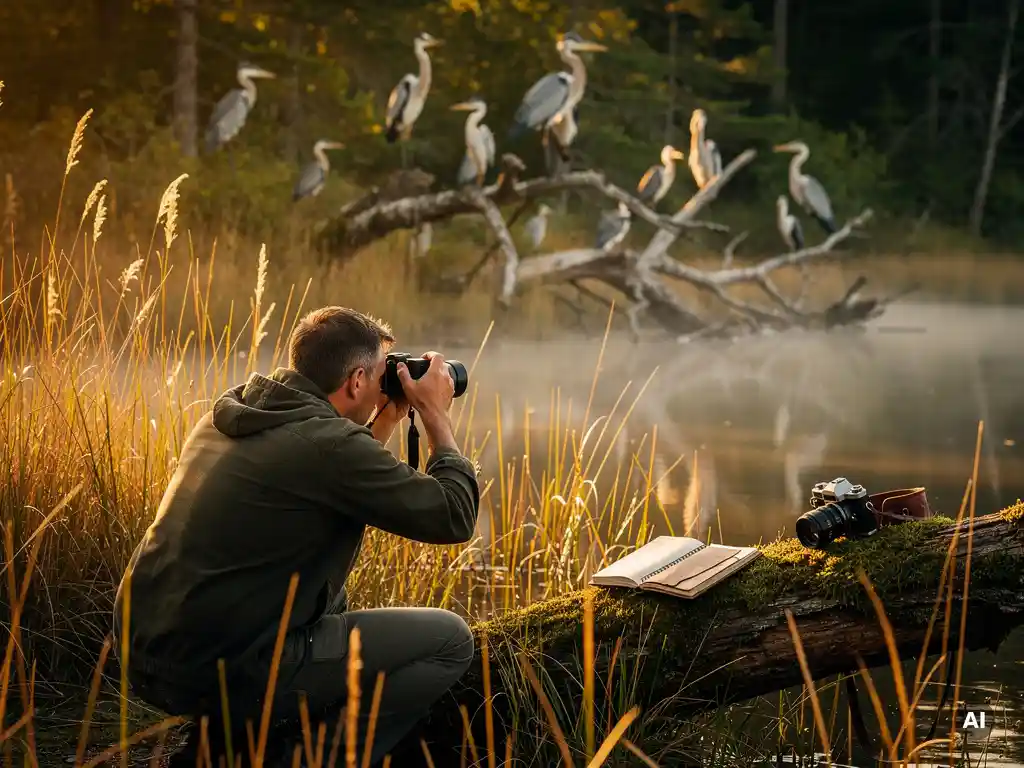
The best habitats for birdwatching in 2026 are wetlands, coastal areas, mixed forests, and open grasslands, each supporting distinct communities of species that reward patient observers. Habitat type determines not just which birds you will encounter, but when and how reliably you will find them. The questions below break down each major habitat, what makes it productive, and how seasonal timing shapes every outing.
Which habitat types attract the greatest bird species diversity?
Wetlands consistently attract the greatest bird species diversity of any single habitat type, followed closely by coastal estuaries and mixed woodland edges. The reason is straightforward: these environments offer multiple resource layers, open water, dense vegetation, mudflats, and adjacent dry land, that support feeding, nesting, and roosting simultaneously across a wide range of species.
Ecologists refer to the boundary between two habitat types as an “ecotone,” and these transition zones are consistently the richest birdwatching spots. A field edge bordering a woodland, or a reedbed meeting open water, concentrates species from both environments into a narrow, observable strip. When planning where to go birdwatching, prioritizing sites with multiple overlapping habitat types will almost always yield a higher species count than any single uniform environment.
The most species-rich birdwatching habitats in general terms are:
- Wetlands and reedbeds – high diversity of waders, waterfowl, and reed specialists
- Coastal estuaries and mudflats – exceptional for migratory shorebirds and wildfowl
- Mixed woodland and forest edge – strong year-round passerine diversity
- Open grasslands with scrub – reliable for raptors, larks, and ground-nesting birds
- Tropical and subtropical forest – globally the highest raw species counts
What makes a wetland ideal for birdwatching?
An ideal wetland for birdwatching combines shallow open water, dense emergent vegetation such as reeds or sedges, exposed muddy margins, and minimal human disturbance. This combination supports wading birds, diving ducks, reed-nesting passerines, and migratory species all within a compact, observable area. Managed water levels, a feature of nature reserves, significantly increase a wetland’s productivity for birders.
Water depth variation is particularly important. Shallow margins attract species like snipe, redshank, and egrets that feed by probing soft mud. Deeper open water draws diving ducks, grebes, and cormorants. When a wetland offers both, the species list grows rapidly. Reedbeds add another layer entirely, sheltering secretive species such as bitterns, marsh harriers, and a range of warblers that would be absent from open water alone.
Managed wetland reserves often use sluice gates to lower water levels in late summer, deliberately exposing mudflats that attract migrating waders. This kind of active habitat management is one reason that nature reserve wetlands routinely outperform natural but unmanaged wetlands as birdwatching habitats. When choosing birdwatching locations, a wetland with active conservation management is almost always more productive than a comparable site left entirely to natural fluctuation.
Are forests or open grasslands better for spotting rare birds?
Open grasslands are generally better for spotting rare birds in terms of visibility and encounter rate, but forests hold a higher concentration of specialist species that are rare precisely because their habitat is shrinking. The right answer depends on what kind of rarity you are seeking: grasslands offer more frequent encounters with unusual visitors, while forests reward patience with truly uncommon resident species.
What forests offer birdwatchers
Mature woodland, particularly ancient forest with structural diversity, standing deadwood, a varied canopy height, and open glades, supports specialist species that are rarely found elsewhere. Woodpeckers, nuthatches, treecreepers, and a range of owl species are forest-dependent. In Europe and North America, the loss of old-growth woodland has made many of these species scarce, meaning a productive forest site can deliver encounters that no grassland will match.
What grasslands offer birdwatchers
Open grasslands, heathlands, and moorlands offer the visibility advantage: birds are simply easier to see. Raptors hunt in open country and are frequently observed in prolonged flight. Ground-nesting species such as lapwing, curlew, and various larks are accessible in ways that forest birds are not. Grasslands also attract vagrant species during migration, open, flat terrain is where wind-displaced birds tend to land and feed, making grassland sites disproportionately productive during spring and autumn passage.
Where are the best coastal habitats for birdwatching in 2026?
The best coastal birdwatching habitats in 2026 are estuaries, rocky headlands, and sandy beaches with adjacent dune systems. Estuaries rank highest overall because they combine tidal mudflats rich in invertebrates with sheltered water and adjacent saltmarsh, a combination that supports enormous concentrations of waders and wildfowl, particularly during migration and winter.
Rocky headlands serve a different but equally valuable function: they act as natural observation points during seabird migration. Watching from a prominent coastal point during onshore winds in autumn can produce sightings of skuas, shearwaters, gannets, and storm petrels that would otherwise be invisible from land. This style of birdwatching, known as seawatching, is one of the most rewarding and underrated coastal experiences.
Sandy beaches with dune systems and adjacent freshwater scrapes attract a different suite of species again, terns nesting in summer, snow buntings and shore larks in winter, and a consistent stream of passage migrants in both spring and autumn. Coastal bird habitats in 2026 continue to face pressure from rising sea levels and increased recreational use, making managed coastal reserves particularly important as reliable birdwatching spots.
How does habitat degradation affect birdwatching quality?
Habitat degradation directly reduces birdwatching quality by lowering species diversity, reducing population sizes, and eliminating the specialist birds that make a location distinctive. A degraded wetland drained for agriculture, a forest fragmented by development, or a grassland converted to intensive arable land will support a fraction of the bird life it once held, and the species lost first are typically the rarest and most sought-after.
The practical impact on birdwatchers is significant. Sites that were reliably productive a decade ago may now require far more time and effort for the same encounter rate. Drainage of wetlands removes waders and reed-nesting birds entirely. Pesticide use on farmland collapses invertebrate populations that insectivorous birds depend on. Light pollution and noise around previously quiet habitats disrupt breeding behavior and reduce the quality of early-morning visits, which are traditionally the most productive time to birdwatch.
Choosing protected nature reserves and sites managed by conservation organizations is the most reliable way to find high-quality bird habitats in 2026. These sites maintain the structural complexity, varied vegetation, managed water levels, controlled disturbance, that degraded habitats lose. When researching the best birdwatching locations, checking whether a site has active conservation management is a more reliable quality indicator than historical species lists alone.
What time of year is best for each birdwatching habitat?
The best time of year for birdwatching varies by habitat type: wetlands peak in spring and autumn during migration, coastal estuaries are most productive in winter, forests are richest in early spring when breeding song is at its height, and open grasslands offer the most visible activity in late spring and early summer. Matching your visit to the right seasonal window makes a significant difference to what you encounter.
Here is a practical seasonal guide by habitat:
- Wetlands: Spring (April to May) for breeding waders and arriving migrants; August to October for departing waders on return migration
- Coastal estuaries: October to March for peak wader and wildfowl numbers; May for late-departing migrants and overshoots
- Mixed woodland and forest: April to June for dawn chorus, territorial song, and breeding activity; October to November for winter thrushes and finch flocks
- Open grasslands and heathland: Late April to July for ground-nesting species and displaying raptors; winter for short-eared owls and hunting raptors
- Rocky headlands and seawatching points: September to November during onshore winds for peak seabird passage
Weather conditions within each season matter as much as the calendar date. In spring, a period of warm southerly winds brings migrant passerines to woodland and coastal scrub in numbers that calm, cold weather will not produce. In autumn, a strong onshore gale is the single best trigger for productive seawatching. Understanding how weather interacts with seasonal patterns is what separates consistently successful birdwatchers from those who rely on dates alone.
How PastBook helps you preserve your birdwatching memories
Every birdwatching trip leaves you with a camera roll full of fleeting moments. A rare bird at dawn, a flock lifting off the water, the quiet of a morning on the marsh. They deserve more than sitting unseen on your phone.
With the Aplicativo PastBook, you can turn those photos into a printed hardcover photo book, no design skills needed. You stay in control the whole way.
- Find your trip photos easily: Pick your own photos from your phone’s camera roll, or let the app help you find them by trip, date range, location, or album
- Automatic layout: The app lays your chosen photos out into a book for you
- Make it yours: Before you order, swap or add photos, remove pages, change the cover, and add captions
- Compartilhe as memórias: With the Contribution feature, friends and family who joined your outing can add their photos to the same book
- Impresso e entregue: We print your book with a local printing partner and ship it to you
Whether it is a winter estuary visit or a week-long forest birding trip, your photos deserve a home that lasts. Download the PastBook app and turn this year’s best birdwatching moments into a keepsake you will enjoy for years.