



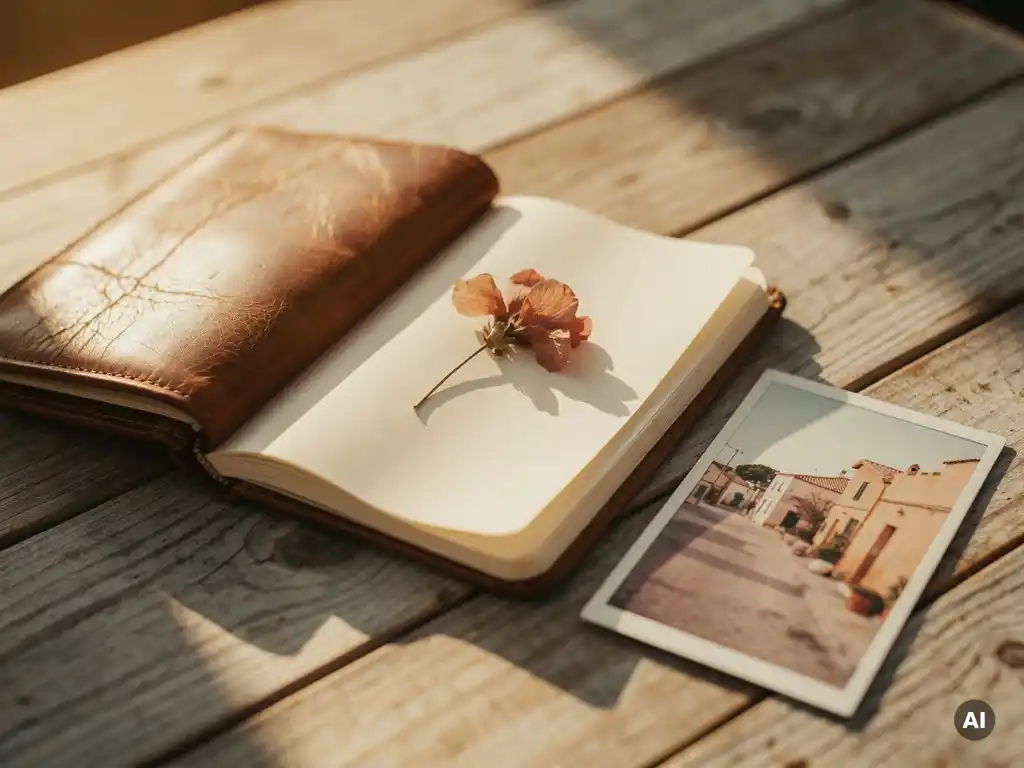
Missing a place and missing a feeling are two different things. When you miss a place, you long for a physical location, its streets, its light, its sounds. When you miss a feeling, you’re grieving an emotional state: the freedom, the wonder, the version of yourself that existed in that moment. Most travel nostalgia is really the second kind.
The distinction matters because it changes how you understand what you’re actually longing for, and whether you can ever get it back. The questions below unpack why travel nostalgia hits so hard, what you’re really missing, and how to hold onto those feelings before they slip away.
Why do we feel nostalgic for places we’ve already left?
We feel nostalgic for places we’ve left because our brains encode travel experiences with unusually strong emotional and sensory detail. New environments trigger heightened attention, so memories formed during travel feel more vivid and meaningful than everyday ones. When we return to ordinary life, the contrast between that heightened state and routine can trigger a deep sense of longing.
This kind of wanderlust isn’t just about wanting to go back. It’s your mind recognizing that something felt genuinely alive during that trip, and mourning the loss of that aliveness. Psychologists often describe this as the “holiday effect”: the combination of novelty, freedom from routine, and emotional presence that makes travel memories feel so precious in hindsight.
The intensity of travel nostalgia also has a timing element. The feeling tends to peak not immediately after a trip, but weeks or months later, once the everyday grind has fully reasserted itself. That’s when the contrast becomes sharpest, and the longing hits hardest.
What’s the difference between missing a place and missing a feeling?
Missing a place is concrete: you want to return to a specific location, to walk the same streets, eat at the same restaurant, see the same view. Missing a feeling is more elusive: you’re longing for an emotional state, the lightness, the curiosity, the sense of possibility, that happened to exist in that place. The two often get confused because the place acts as a container for the feeling.
This is why returning to a beloved destination sometimes disappoints. The place is still there, but the feeling isn’t guaranteed to follow. The feeling was shaped by who you were with, where you were in your life, what you were carrying emotionally at the time. A sunset in Lisbon can look identical two years later and feel completely different.
Understanding this distinction is actually freeing. It means the feeling you’re chasing isn’t locked inside a geography, it’s something you can cultivate, reconnect with, and even recreate in different ways. It also means that preserving travel memories isn’t just about documenting places. It’s about capturing the emotional texture of a moment before it fades.
Can you ever recreate a travel feeling you’ve lost?
You can’t recreate a travel feeling exactly, but you can reconnect with its emotional core. The specific circumstances of any trip are unrepeatable, but the feelings underneath, freedom, wonder, connection, presence, are accessible through other experiences, through meaningful rituals, and through revisiting the memories themselves in a tangible way.
Some of the most effective ways to reconnect with a lost travel feeling include:
- Revisiting sensory anchors – the music you listened to, the food you ate, the scent of a place. Sensory memory is powerful and can pull you back emotionally even when the physical experience is gone.
- Looking through your photos intentionally – not a quick scroll, but a deliberate revisit that lets you sit with what you were experiencing at the time.
- Sharing the memory with someone who was there – retelling a travel story activates the emotional memory, not just the factual one.
- Creating new novelty in everyday life – the feeling of travel is partly a feeling of aliveness that comes from doing unfamiliar things. You don’t need a plane ticket to access that.
The goal isn’t to replicate the past. It’s to reconnect with what made it meaningful, and carry that forward.
Why do photos help us reconnect with how a trip felt?
Photos help us reconnect with travel feelings because they serve as emotional anchors, not just visual records. A good travel photo doesn’t just show you where you were, it pulls you back into how you felt in that moment. The light, the expression on someone’s face, the chaos of a market or the stillness of a mountain view, these visual cues trigger the emotional memory that surrounds them.
This is why the quality and curation of your travel photos matter so much. A feed full of blurry duplicates and throwaway shots doesn’t evoke much. But a carefully chosen image, even an imperfect one, that captures a genuine moment can bring an entire trip rushing back.
There’s also something about physical photos, as opposed to digital ones buried in a camera roll, that deepens this reconnection. Holding a printed photo book of a trip engages you differently than scrolling a screen. You slow down. You linger. The memories have weight, literally and emotionally. That tactile experience is part of why printed travel memories tend to feel more meaningful than digital archives that never get revisited.
What’s the best way to preserve travel memories before the feeling fades?
The best way to preserve travel memories is to act quickly and intentionally right after a trip, before the emotional vividness fades. Memory degrades fast, not the facts, but the feeling. Within days of returning home, the sensory richness of a journey begins to flatten into a general impression. Capturing it while it’s still alive makes the memories far more meaningful to revisit later.
Practical steps that make a real difference:
- Organize your photos within the first week – don’t let them sit in an undifferentiated mass on your phone. Even a rough sort by day or location helps.
- Add context while you remember it – a quick note about where a photo was taken or why it mattered will mean everything five years from now.
- Choose your best images, not all of them – a curated set of 50 meaningful photos tells a better story than 500 unfiltered ones.
- Create something physical – a printed photo book, a poster, or even a printed set of favorites gives the memory a home outside your phone.
- Don’t wait for the “right moment” to do it – the longer you wait, the more the feeling fades and the harder it becomes to revisit with the same emotional investment.
The window right after a trip, when the wanderlust is still warm and the details are still sharp, is the best time to turn those scattered images into something lasting.
Come PastBook ti aiuta a conservare i ricordi di viaggio
We built PastBook specifically for this moment: the one right after you get home from a trip, when the feeling is still alive and you want to hold onto it. Here’s how we make it effortless:
- Selezione di foto basata sull'IA – our platform automatically picks your best travel photos, removes duplicates and low-quality images, and arranges them into a beautifully designed layout. No manual editing, no blank pages.
- Under 60 seconds from start to finish – select a date range, location, or album, and a print-ready photo book is ready before the feeling has a chance to fade.
- Importa da ovunque – pull photos from Instagram, Facebook, Google Drive, Dropbox, or directly from your phone, so no travel memory gets left behind.
- Stampa di qualità premium – our album fotografici di viaggio are printed on FSC-certified paper in soft cover, hardcover, and premium hardcover formats, shipped worldwide.
- Looks like you spent hours on it – the result is a beautiful, curated keepsake that captures the spirit of your trip, with none of the effort.
Don’t let the feeling fade before you’ve captured it. Create your travel photo book today and turn your favorite journey into something you can relive anytime.