






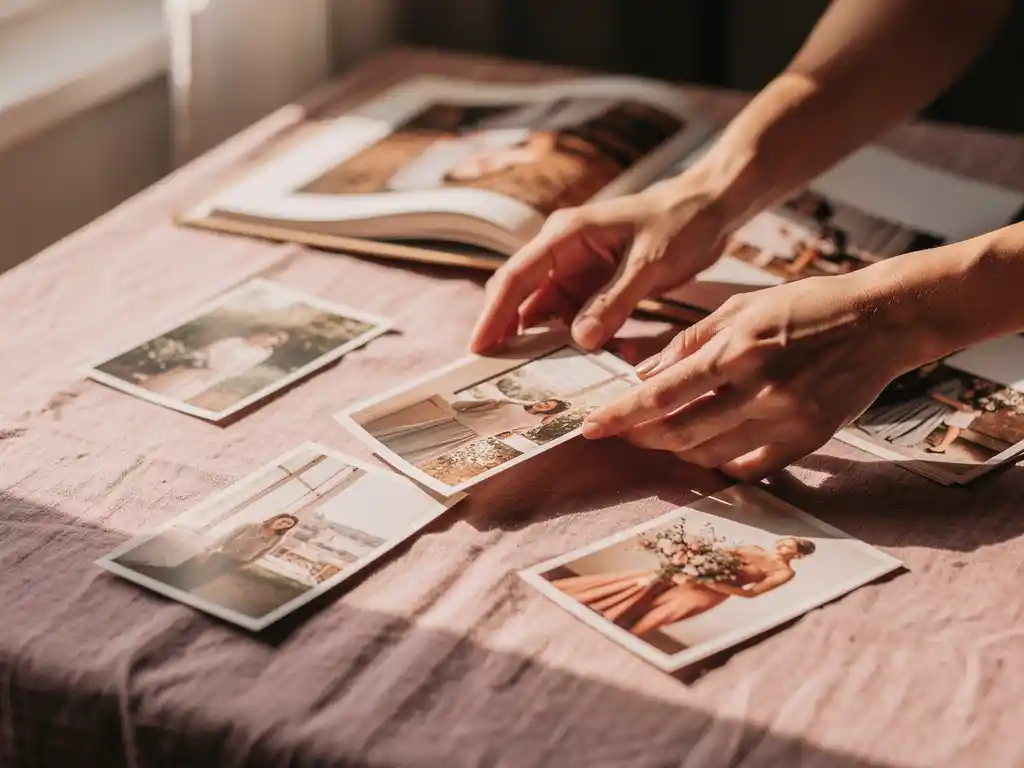
Choosing the best photos for a photo book comes down to three things: emotional impact, image quality, and variety. A strong photo book tells a story, so you want images that capture real moments, feature clear subjects, and cover different scenes rather than repeating the same shot. When you preserve your memories in a photo book, the selection process matters as much as the printing. The right photos make the difference between a book you treasure and one that sits on a shelf.
Selecionar fotos manualmente está consumindo um tempo que você não tem
Most people sit down to create a photo book and immediately hit a wall: hundreds, sometimes thousands, of photos to sort through, with no obvious starting point. Hours pass. The project gets shelved. The holiday feeling fades, the milestone moment loses its urgency, and eventually the photos stay trapped on your phone. Manual selection is the single biggest reason people never finish a photo book they meant to make. The fix is to stop trying to review every photo and instead work with a clear set of rules for what stays and what goes: quality, variety, and story arc. Apply those filters first, then make final choices from a much smaller pool.
Manter muitas fotos semelhantes está arruinando silenciosamente o seu álbum de fotos
The most common photo book mistake is including too many shots of the same moment: five nearly identical photos of someone blowing out birthday candles, three consecutive beach shots taken thirty seconds apart. Each photo feels worth keeping on its own, but together they create repetition that drains the energy from the whole book. The reader’s eye stops engaging. The solution is to treat each moment as a single slot. Pick one photo that best represents it, and cut the rest. This forces better choices and produces a tighter, more compelling final book.
O que torna uma foto “boa o suficiente” para um álbum de fotos?
A photo is good enough for a photo book when it is technically clear, emotionally resonant, and tells you something about the moment. It should be in focus on the main subject, reasonably well lit, and free of heavy blur. Beyond technical quality, the photo needs to carry meaning, such as a real expression, a recognizable place, or a moment worth remembering.
Technical quality is the baseline. A blurry, dark, or heavily pixelated image will look worse in print than it does on a screen, because print removes the forgiveness of a backlit display. If you cannot recognize the subject clearly, the photo does not belong in the book.
Emotional quality is what separates a photo book from a slideshow. Candid moments, real expressions, and natural interactions tend to age better than posed group shots. A photo of a child laughing mid-run tells more of a story than a stiff smile at the camera. Both have a place, but the candid shots are usually the ones people return to.
Quantas fotos você deve incluir em um álbum de fotos?
Most photo books work best with between 60 and 120 photos. That gives you enough images to tell a full story without overcrowding pages or diluting the strongest shots. The right number depends on the event or time period you are covering, not on how many photos you took.
Uma viagem de fim de semana pode ser bem servida por 40 a 60 fotos. Um ano inteiro de vida familiar pode justificar 100 ou mais. O princípio orientador é que cada foto deve merecer seu lugar. Se você se pegar incluindo uma foto apenas para preencher uma página, isso é um sinal para cortar em vez de encher.
Menos fotos, porém mais fortes, consistentemente produzem um resultado melhor. Um álbum de fotos com 60 imagens cuidadosamente escolhidas parece mais intencional e mais emocional do que um com 200 imagens medianas. A qualidade sempre supera a quantidade quando o objetivo é um livro que alguém realmente vai querer folhear.
Quais tipos de fotos funcionam melhor em um layout de álbum de fotos?
Livros de fotos funcionam melhor com uma mistura de fotos amplas de ambientação, detalhes em close-up e fotos espontâneas de pessoas. As fotos amplas definem o cenário e dão respiro ao layout. Os close-ups adicionam textura e intimidade. Fotos espontâneas de pessoas carregam o peso emocional. Juntos, esses três tipos criam um ritmo visual pelas páginas.
Establishing shots, such as a landscape, a building, or a table set for a meal, anchor the reader in a time and place. They work particularly well as full-page or double-page spreads at the start of a section. Detail shots of objects, food, or textures add variety without needing a person in the frame. And photos of people in natural moments, not posed ones, tend to be the images readers come back to most.
As fotos em grupo têm seu lugar, mas podem dominar um layout se usadas em excesso. Misture-as com retratos individuais e fotos de ação para manter as páginas dinâmicas em vez de estáticas.
Como reduzir centenas de fotos para apenas as melhores?
Cut photos down to the best ones by working in two passes. In the first pass, remove anything technically poor: blurry, dark, or duplicate shots go immediately. In the second pass, apply a story filter. Keep only the photos that move the narrative forward or capture a moment that matters. This process typically reduces a large collection by 70 to 80 percent.
Start with a hard cull. Go through your full set and delete anything you would not stop to look at twice: eyes closed, wrong exposure, accidental shots, near-identical duplicates. Do not agonize at this stage. If a photo makes you hesitate, it probably does not belong.
Em seguida, aplique o filtro de história. Descreva os eventos ou momentos que você quer que o livro cubra e atribua fotos a cada um. Cada momento recebe uma ou duas fotos, não cinco. Se você tiver dez fotos semelhantes da mesma cena, escolha aquela em que a luz estiver melhor ou a expressão mais forte, e descarte as outras.
Essa abordagem de duas passagens funciona porque separa as decisões técnicas das emocionais. Você não está tentando fazer as duas coisas ao mesmo tempo, o que torna cada escolha mais rápida e confiante.
Você deve misturar fotos em formato retrato e paisagem em um álbum de fotos?
Sim, misturar fotos em retrato e paisagem em um álbum de fotos não só é bom, como também melhora ativamente o layout. A variedade de orientação cria interesse visual e evita que as páginas pareçam monótonas. A maioria dos layouts de álbuns de fotos é projetada para acomodar ambas as orientações na mesma página dupla, então a mistura raramente cria um problema técnico.
A chave é o equilíbrio. Uma página composta inteiramente por fotos em retrato pode parecer densa e vertical. Uma página só com fotos em paisagem pode parecer larga e plana. Quando você combina as duas, o layout naturalmente cria um contraste que atrai o olhar pela página.
Onde a orientação é importante é para imagens de página inteira ou de destaque. Uma foto paisagem funciona melhor como uma imagem de largura total. Uma foto retrato funciona melhor como uma imagem vertical de página inteira. Ao usar uma foto como imagem dominante em uma página, combine a orientação com o espaço do layout em vez de forçar um corte que remova partes importantes da imagem.
Quais são os erros mais comuns na seleção de fotos a serem evitados?
Os erros mais comuns na seleção de fotos são incluir muitas imagens semelhantes, manter fotos tecnicamente ruins por motivos sentimentais, negligenciar a variedade de assuntos e ângulos, e tentar incluir tudo em vez de editar para selecionar as melhores. Cada um desses erros enfraquece o livro final de uma maneira diferente.
- Muitos duplicados: Selecionar cinco tomadas quase idênticas do mesmo momento dilui o impacto de cada uma. Escolha a melhor versão e corte as demais.
- Manter fotos borradas ou escuras: O apego sentimental a um momento não conserta uma imagem tecnicamente ruim. Se a foto não estiver nítida, não ficará boa impressa.
- Sem variedade no assunto: Um livro cheio de fotos de grupo, ou apenas fotos de paisagem, rapidamente perde o ritmo visual. Busque uma mistura de pessoas, lugares e detalhes.
- Incluindo tudo: Mais fotos não significam um livro melhor. A edição é o que dá às imagens mais fortes o espaço que elas merecem.
- Ignorando o arco da história: Um álbum de fotos deve ter um começo, um meio e um fim. Selecionar fotos sem pensar na sequência produz uma coleção em vez de uma história.
O hábito mais eficaz é ser implacável na primeira triagem. Cada foto que você remove da consideração torna as escolhas restantes mais fáceis e o livro final mais forte.
How PastBook helps you build your photo book
Choosing the right photos is hard work, and most people either rush the process or abandon it entirely. That is why we built PastBook. You stay in control of the choices, and we make the rest simple, with no design skills needed.
- Find photos faster: In our aplicativo para criar álbuns de fotos bonitos, you can select your own photos from your phone’s camera roll, or let the app help you find them by trip, date range, location, or album.
- Quick layout: Once you have chosen your photos, the app lays them out into a book for you.
- Full control before you order: You can swap or add photos, remove pages, change the cover, and add captions before ordering, so the final book is always yours.
- Print and delivery: Your finished hardcover book is printed by a local printing partner and shipped to you.
The result is a photo book that looks like you spent weeks on it, made in minutes. Download the PastBook app on iOS or Android and create your first photo book today.
Artigos relacionados
- What are the best Thanksgiving gifts for family members in 2026?
- Como criar um álbum de memórias de viagem em casa?
- Quais são os melhores aplicativos para armazenar memórias de viagens em 2026?
- Um presente significativo para o aniversário de um casal?
- Que tal um item personalizado que ela possa usar todos os dias, como uma caneca com uma foto de vocês, uma joia gravada com as iniciais dos filhos ou uma manta com estampas de fotos de família?