




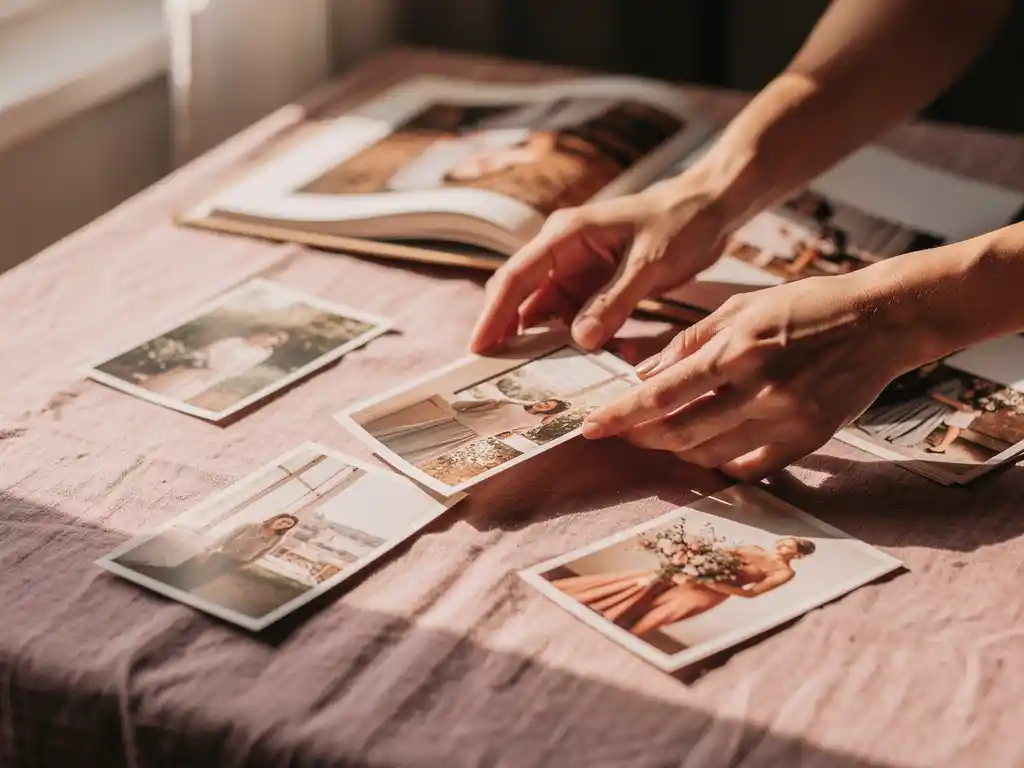
Choosing the best photos for a photo book comes down to three things: emotional impact, image quality, and variety. A strong photo book tells a story, so you want images that capture real moments, feature clear subjects, and cover different scenes rather than repeating the same shot. When you preserve your memories in a photo book, the selection process matters as much as the printing. The right photos make the difference between a book you treasure and one that sits on a shelf.
Das manuelle Auswählen von Fotos frisst Zeit, die Sie nicht haben
Most people sit down to create a photo book and immediately hit a wall: hundreds, sometimes thousands, of photos to sort through, with no obvious starting point. Hours pass. The project gets shelved. The holiday feeling fades, the milestone moment loses its urgency, and eventually the photos stay trapped on your phone. Manual selection is the single biggest reason people never finish a photo book they meant to make. The fix is to stop trying to review every photo and instead work with a clear set of rules for what stays and what goes: quality, variety, and story arc. Apply those filters first, then make final choices from a much smaller pool.
Zu viele ähnliche Fotos zu behalten, ruiniert schleichend Ihr Fotobuch
The most common photo book mistake is including too many shots of the same moment: five nearly identical photos of someone blowing out birthday candles, three consecutive beach shots taken thirty seconds apart. Each photo feels worth keeping on its own, but together they create repetition that drains the energy from the whole book. The reader’s eye stops engaging. The solution is to treat each moment as a single slot. Pick one photo that best represents it, and cut the rest. This forces better choices and produces a tighter, more compelling final book.
Was macht ein Foto “gut genug” für ein Fotobuch?
A photo is good enough for a photo book when it is technically clear, emotionally resonant, and tells you something about the moment. It should be in focus on the main subject, reasonably well lit, and free of heavy blur. Beyond technical quality, the photo needs to carry meaning, such as a real expression, a recognizable place, or a moment worth remembering.
Technical quality is the baseline. A blurry, dark, or heavily pixelated image will look worse in print than it does on a screen, because print removes the forgiveness of a backlit display. If you cannot recognize the subject clearly, the photo does not belong in the book.
Emotional quality is what separates a photo book from a slideshow. Candid moments, real expressions, and natural interactions tend to age better than posed group shots. A photo of a child laughing mid-run tells more of a story than a stiff smile at the camera. Both have a place, but the candid shots are usually the ones people return to.
Wie viele Fotos sollten Sie in ein Fotobuch aufnehmen?
Most photo books work best with between 60 and 120 photos. That gives you enough images to tell a full story without overcrowding pages or diluting the strongest shots. The right number depends on the event or time period you are covering, not on how many photos you took.
Ein Wochenendausflug kann gut mit 40 bis 60 Fotos abgedeckt werden. Ein ganzes Jahr Familienleben könnte 100 oder mehr rechtfertigen. Der leitende Grundsatz ist, dass jedes Foto seinen Platz verdienen sollte. Wenn Sie ein Bild nur einfügen, um eine Seite zu füllen, ist das ein Signal zum Kürzen, nicht zum Aufblähen.
Weniger, dafür stärkere Fotos erzielen durchweg ein besseres Ergebnis. Ein Fotobuch mit 60 sorgfältig ausgewählten Bildern wirkt bewusster und emotionaler als eines mit 200 durchschnittlichen. Qualität geht immer vor Quantität, wenn das Ziel ein Buch ist, das jemand auch wirklich durchblättern möchte.
Welche Arten von Fotos eignen sich am besten für ein Fotobuch-Layout?
Fotobücher funktionieren am besten mit einer Mischung aus weiten Übersichtsbildern, Nahaufnahmen von Details und ehrlichen Personenaufnahmen. Weite Aufnahmen legen die Szene fest und geben dem Layout Raum zum Atmen. Nahaufnahmen sorgen für Textur und Intimität. Ehrliche Personenaufnahmen tragen die emotionale Last. Zusammen erzeugen diese drei Arten einen visuellen Rhythmus über die Seiten hinweg.
Establishing shots, such as a landscape, a building, or a table set for a meal, anchor the reader in a time and place. They work particularly well as full-page or double-page spreads at the start of a section. Detail shots of objects, food, or textures add variety without needing a person in the frame. And photos of people in natural moments, not posed ones, tend to be the images readers come back to most.
Gruppenfotos haben ihren Platz, können aber bei übermäßiger Verwendung ein Layout dominieren. Kombiniere sie mit Einzelporträts und Action-Aufnahmen, um die Seiten dynamisch und nicht statisch wirken zu lassen.
Wie reduziert man Hunderte von Fotos auf die besten?
Cut photos down to the best ones by working in two passes. In the first pass, remove anything technically poor: blurry, dark, or duplicate shots go immediately. In the second pass, apply a story filter. Keep only the photos that move the narrative forward or capture a moment that matters. This process typically reduces a large collection by 70 to 80 percent.
Start with a hard cull. Go through your full set and delete anything you would not stop to look at twice: eyes closed, wrong exposure, accidental shots, near-identical duplicates. Do not agonize at this stage. If a photo makes you hesitate, it probably does not belong.
Wenden Sie dann den Story-Filter an. Legen Sie die Ereignisse oder Momente fest, die das Buch abdecken soll, und weisen Sie jedem davon Fotos zu. Jeder Moment erhält ein oder zwei Fotos, nicht fünf. Wenn Sie zehn ähnliche Aufnahmen derselben Szene haben, wählen Sie diejenige aus, bei der das Licht am besten ist oder der Ausdruck am stärksten ist, und lassen Sie die anderen weg.
Dieser Ansatz mit zwei Durchgängen funktioniert, weil er technische Entscheidungen von emotionalen trennt. Man versucht nicht, beides auf einmal zu tun, was jede Entscheidung schneller und sicherer macht.
Sollte man Porträt- und Landschaftsfotos in einem Fotobuch mischen?
Ja, das Mischen von Hoch- und Querformatfotos in einem Fotobuch ist nicht nur in Ordnung, sondern verbessert sogar das Layout. Abwechslung in der Ausrichtung schafft visuelles Interesse und verhindert, dass Seiten eintönig wirken. Die meisten Fotobuch-Layouts sind so konzipiert, dass beide Ausrichtungen auf derselben Doppelseite Platz finden, sodass die Mischung selten ein technisches Problem darstellt.
Der Schlüssel ist Balance. Eine Seite, die ausschließlich aus Hochformatfotos besteht, kann dicht und vertikal wirken. Eine Seite mit ausschließlich Querformatfotos kann breit und flach wirken. Wenn Sie beides kombinieren, schafft das Layout auf natürliche Weise Kontraste, die das Auge über die Seite ziehen.
Wo die Ausrichtung eine Rolle spielt, ist bei ganzseitigen oder Hero-Bildern. Ein Querformatfoto eignet sich besser als eine durchgehende Breite. Ein Hochformatfoto eignet sich besser als vertikal formatiges Ganzseitenbild. Wenn Sie ein Foto als dominierendes Bild auf einer Seite verwenden, passen Sie die Ausrichtung an den Layout-Slot an, anstatt einen Beschnitt zu erzwingen, der wichtige Teile des Bildes abschneidet.
Was sind die häufigsten Fehler bei der Fotoauswahl, die man vermeiden sollte?
Die häufigsten Fehler bei der Fotoauswahl sind, zu viele ähnliche Aufnahmen aufzunehmen, technisch schlechte Bilder aus sentimentalen Gründen aufzubewahren, Abwechslung bei Motiv und Winkel zu vernachlässigen und zu versuchen, alles einzubeziehen, anstatt sich auf das Beste zu beschränken. Jeder dieser Punkte schwächt das Endergebnis auf unterschiedliche Weise.
- Zu viele Duplikate: Fünf fast identische Aufnahmen desselben Moments auszuwählen, verwässert die Wirkung jeder einzelnen. Wählen Sie die beste Version aus und schneiden Sie den Rest weg.
- Unscharfe oder dunkle Fotos behalten Wenn die technische Qualität schlecht ist, kann eine sentimentale Bindung an einen Moment das nicht beheben. Wenn das Foto nicht scharf ist, wird es auch im Druck nicht gut aussehen.
- Keine Abwechslung im Thema: Ein Buch voller Gruppenaufnahmen oder nur Landschaftsfotos verliert schnell seinen visuellen Rhythmus. Streben Sie eine Mischung aus Menschen, Orten und Details an.
- Alles inbegriffen: Mehr Fotos bedeuten nicht gleich ein besseres Buch. Das Kürzen gibt den stärksten Bildern den Raum, den sie verdienen.
- Abgesehen vom Handlungsbogen: Ein Fotobuch sollte einen Anfang, eine Mitte und ein Ende haben. Die Auswahl von Fotos ohne Berücksichtigung der Reihenfolge ergibt eine Sammlung, keine Geschichte.
Die mit Abstand effektivste Gewohnheit ist es, beim ersten Ausmisten rigoros zu sein. Jedes Foto, das Sie aus der engeren Auswahl entfernen, erleichtert die verbleibenden Entscheidungen und macht das fertige Buch stärker.
How PastBook helps you build your photo book
Choosing the right photos is hard work, and most people either rush the process or abandon it entirely. That is why we built PastBook. You stay in control of the choices, and we make the rest simple, with no design skills needed.
- Find photos faster: In our App zum Erstellen schöner Fotobücher, you can select your own photos from your phone’s camera roll, or let the app help you find them by trip, date range, location, or album.
- Quick layout: Once you have chosen your photos, the app lays them out into a book for you.
- Full control before you order: You can swap or add photos, remove pages, change the cover, and add captions before ordering, so the final book is always yours.
- Print and delivery: Your finished hardcover book is printed by a local printing partner and shipped to you.
The result is a photo book that looks like you spent weeks on it, made in minutes. Download the PastBook app on iOS or Android and create your first photo book today.
Verwandte Artikel
- Wie macht man ein bedeutungsvolles Geschenk aus Reisefotos?
- Die besten Apps zum Speichern von Reiseerinnerungen im Jahr 2026
- Was lässt eine Reiseerinnerung im Gehirn haften bleiben?
- Was ist das emotionalste Geschenk, das man seinen Eltern machen kann?
- Wie erstellt man ein Fotobuch, das professionell aussieht?